The 2024 U.S. Presidential election served as a high-stakes laboratory for the burgeoning world of prediction markets, pitting established academic platforms against crypto-native giants and regulated newcomers. As of January 19, 2026, the dust has finally settled on the post-election post-mortems, revealing a surprising "Accuracy War" where the most liquid markets weren’t necessarily the most correct. While all major platforms eventually signaled a Republican victory, the path they took—and the volatility they experienced—highlighted deep structural divides in how we forecast the future.
Currently, the market is shifting its focus to the 2026 Midterms, with "control of the House" contracts already seeing significant early action. On Kalshi, the probability of a Democratic "Blue Wave" in 2026 is currently hovering at 42%, while PredictIt traders are more cautious at 38%. This 400-basis-point spread is a direct result of the different participant bases and fee structures that define these platforms. The divergence is generating intense interest among arbitrageurs who are looking to exploit the lingering "accuracy gap" that defined the 2024 cycle.
The Market: What's Being Predicted
The core of the "Accuracy War" centers on how PredictIt, Kalshi, and Polymarket processed the 2024 election data compared to their current handling of the 2026 legislative outlook. During the 2024 cycle, Polymarket dominated the headlines with over $3.3 billion in total volume, while the regulated U.S. exchange Kalshi struggled initially after a late legal entry in October 2024. PredictIt, the long-standing academic project, operated under a cloud of regulatory uncertainty that was only resolved in mid-2025.
A landmark study from Vanderbilt University released in late 2025 found that PredictIt achieved a staggering 93% accuracy rate across 2,500 individual contracts, compared to 78% for Kalshi and just 67% for Polymarket. This disparity has fundamentally changed how traders view these platforms. While Polymarket offers the highest liquidity and the "wisdom of the global crowd," its signals were often distorted by massive "whale" positions, such as the famous $30 million bet by a French trader that skewed Republican odds for weeks.
Today, the resolution criteria for 2026 markets have become more standardized thanks to the 2025 CLARITY Act, which provided a federal framework for event contracts. Kalshi has surged to a dominant position, claiming a 66.4% share of daily volume as of mid-January 2026. Polymarket, meanwhile, has successfully pivoted into the U.S. market, launching a regulated domestic arm in December 2025 to compete directly with Kalshi and PredictIt on American soil.
Why Traders Are Betting
The primary driver of the odds today is the varying "friction" created by fee structures. PredictIt remains the most expensive venue, charging a 10% fee on all gross profits and a 5% fee on withdrawals. This creates a "PredictIt Premium," where a contract might trade at 55 cents when the "true" probability is closer to 50%, simply because traders need a higher margin to cover the fees. In contrast, the newly launched Polymarket US (DCM) has introduced a hyper-competitive 0.10% fee to lure traders away from Kalshi’s probability-weighted fee model, which averages around 1.2% per trade.
Participant demographics also play a crucial role. PredictIt’s $3,500 trading limit (raised from $850 in July 2025) ensures that the market represents a "crowd of peers" rather than a "market of whales." This "enforced diversity" is credited with its high accuracy in 2024; it was essentially a massive survey of informed U.S. voters with skin in the game. On the other hand, the international nature of Polymarket Global often leads to "sentiment-driven" spikes, where global crypto-traders bet on "narratives" rather than granular U.S. state-level polling or legislative nuances.
Recent news has also influenced the 2026 odds. Following the partnership between Kalshi and Warner Bros. Discovery (NASDAQ: WBD)'s CNN to integrate live odds into political broadcasts, a surge of "retail" money has entered the market. This influx of less-experienced traders often creates "noise" that savvy pros—many of whom utilize institutional tools from Comcast (NASDAQ: CMCSA)'s CNBC—are quick to capitalize on through mean-reversion strategies.
Broader Context and Implications
The "Accuracy War" has broader implications for how prediction markets are integrated into the global financial system. The 2025 CLARITY Act was a watershed moment, finally clarifying that event contracts are legitimate financial tools for hedging real-world risks. This has allowed major news organizations, including News Corp (NASDAQ: NWS)'s Dow Jones and The Wall Street Journal, to treat prediction market prices with the same reverence as the S&P 500 or Treasury yields.
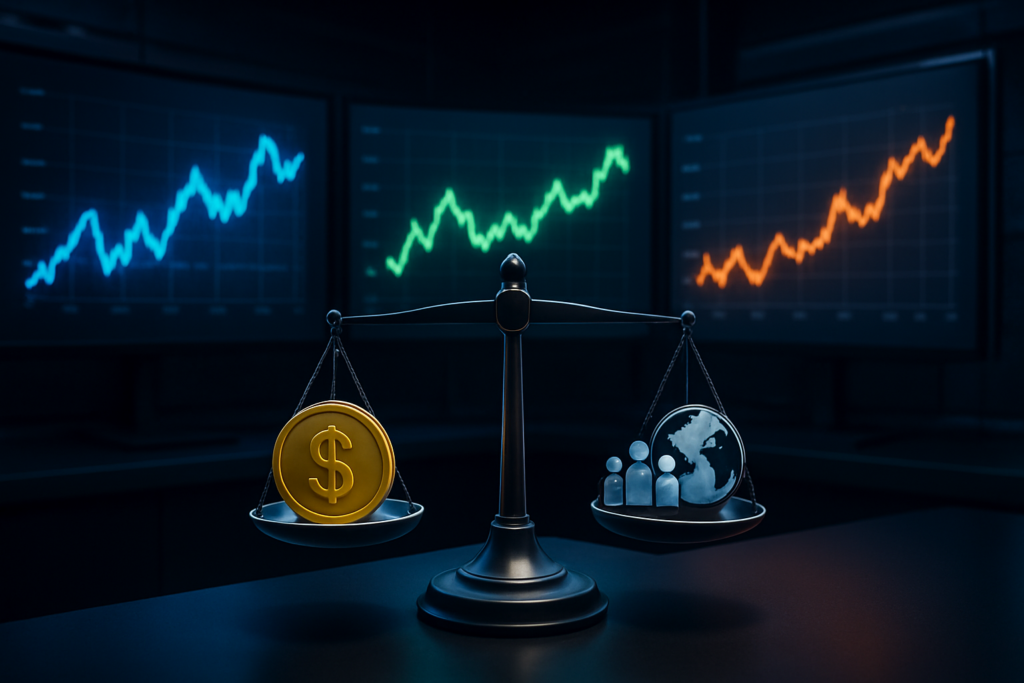
Furthermore, the 2024 results debunked the "Liquidity Equals Accuracy" myth. The fact that the highest-volume market (Polymarket) was the least accurate in its price discovery suggested that "whales" can, in fact, move the needle and create misleading signals. This has led to a renewed interest in the "PredictIt model" of capping individual stakes to ensure a broader, more representative sample of opinions. It suggests that for political events, the "wisdom of the crowd" works best when the crowd isn't dominated by a few deep-pocketed individuals.
The regulatory environment has also matured. The CFTC’s shift from an adversarial to a collaborative stance with platforms like PredictIt has encouraged more academic research into how these markets can serve as "early warning systems" for geopolitical instability or economic shifts. Prediction markets are no longer seen as "gambling" but as a vital layer of the information economy.
What to Watch Next
As we approach the 2026 Midterms, all eyes are on the performance of Polymarket’s new U.S.-regulated exchange. If it can maintain its low fee structure while attracting the high-quality, domestic participant base that PredictIt enjoys, it could theoretically combine the best of both worlds: high liquidity and high accuracy. Traders should watch for any shifts in the "spread" between PredictIt and Kalshi prices; a narrowing gap would indicate that the markets are becoming more efficient at cross-platform arbitrage.
Key dates to monitor include the upcoming "State of the Union" in February 2026, which historically triggers massive volume and price swings in legislative control contracts. Additionally, the first major "test" of the CLARITY Act’s enforcement provisions is expected this spring, as several platforms attempt to launch "economic indicator" contracts tied to sensitive data like the Consumer Price Index (CPI) before they are officially released.
Bottom Line
The competition between PredictIt, Kalshi, and Polymarket has evolved into a sophisticated ecosystem where "accuracy" is the ultimate currency. While Polymarket won the battle for volume in 2024, PredictIt won the battle for precision. In 2026, the playing field is leveling as Kalshi dominates the regulated U.S. space and Polymarket enters the domestic arena with a competitive edge.
The key takeaway for any market observer is that prediction markets are not a monolith. The "odds" on one platform are a reflection of its specific rules, its fees, and its people. As we head into a new election cycle, the "Accuracy War" continues, and the winners will be the platforms that can best balance the need for deep liquidity with the necessity of a diverse, informed participant base.
Ultimately, prediction markets have proved their worth as a superior alternative to traditional polling. In an era of fragmented media and partisan bubbles, the cold, hard numbers of a trading screen offer the most honest look at where the world is actually heading.
This article is for informational purposes only and does not constitute financial or betting advice. Prediction market participation may be subject to legal restrictions in your jurisdiction.
PredictStreet focuses on covering the latest developments in prediction markets.
Visit the PredictStreet website at https://www.predictstreet.ai/.