The global cocoa market is currently navigating a period of intense recalibration, with prices having undergone a significant correction after reaching unprecedented highs in late 2024 and early 2025. While the speculative froth has largely cleared, bringing prices down from their peaks, the fundamental challenges plaguing West African supply chains remain deeply entrenched. This complex interplay of volatile pricing, persistent production woes, and evolving global demand dynamics is shaping a challenging outlook for the entire cocoa industry.
As of December 2, 2025, cocoa futures have retreated substantially from their record highs, yet they continue to trade at levels significantly elevated above historical averages. This correction has been influenced by more optimistic harvest forecasts emerging from Côte d'Ivoire and the unwinding of speculative positions that had fueled the earlier surge. However, beneath the surface of price volatility, the structural issues in key producing regions, particularly Ghana and Côte d'Ivoire, continue to cast a long shadow, threatening future supplies and signaling a new era of higher baseline costs for chocolate manufacturers worldwide.
A Rollercoaster Ride: Unpacking Cocoa's Volatile Year
The journey for cocoa prices over the past year has been nothing short of a rollercoaster. After a dramatic ascent that saw prices briefly touch nearly $12,000 per ton in early 2025, the market has since experienced a sharp correction, with current prices hovering between $5,000 and $5,400 per ton. While this represents a significant drop of over 50% from the peak, it's crucial to note that these figures are still more than double the 2012-2022 average of $2,525 per ton, indicating a fundamental shift in the market's underlying value. The initial rally was driven by a confluence of factors, primarily severe supply deficits from West Africa and robust demand signals. The subsequent correction was largely a response to revised, albeit still cautious, production outlooks and a retreat by speculative investors.
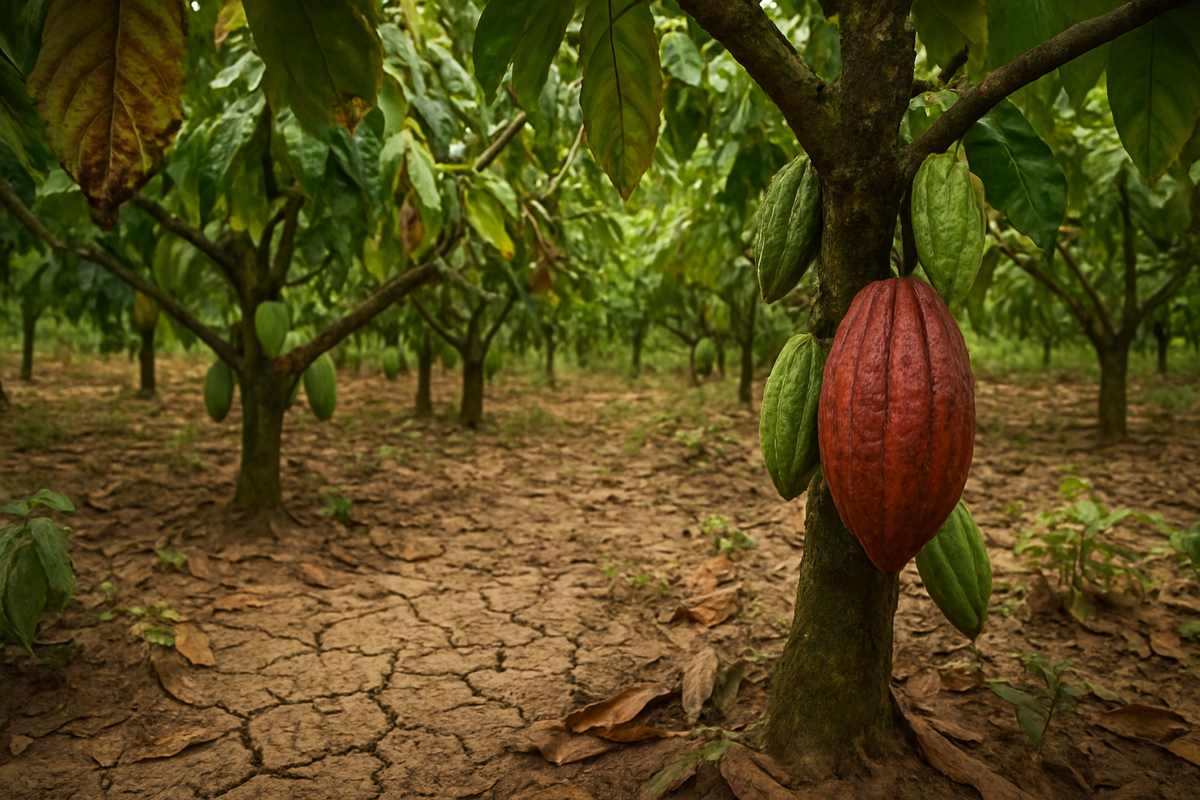
The heart of the supply crisis lies in West Africa, which accounts for an overwhelming 60-70% of global cocoa production. Both Côte d'Ivoire and Ghana are facing a multi-pronged assault on their yields. Aging cocoa trees, many planted decades ago, are past their prime productivity, with limited investment in replanting exacerbating the issue. Compounding this is extreme climate volatility; prolonged droughts, unseasonable heavy rainfall, and intense heatwaves—such as those experienced in 2024 with weeks of temperatures above 32°C—have severely stressed cacao plants. Destructive plant diseases, particularly the Cocoa Swollen Shoot Virus (CSSV) and Cherelle wilt, continue to decimate crops, with significant portions of Ghana's cocoa-producing areas reportedly affected.
Adding to the agricultural challenges, the proliferation of illegal gold mining, known as "galamsey," is encroaching on valuable cocoa farmlands in both nations, degrading soil and displacing communities. Farmers also grapple with a chronic lack of fertilizers, limited access to financing, and inadequate infrastructure, further hindering their ability to maintain healthy plantations and increase productivity. In Ghana, political and economic instability has led to delays in farmer payments and a discrepancy between official prices and higher world prices, fueling smuggling and a loss of official production. Consequently, West Africa is bracing for a projected 10% drop in output for the 2025/26 season, with Côte d'Ivoire expecting production to fall to 1.6 million tonnes and Ghana's harvest potentially dipping below 600,000 tonnes.
On the demand side, global cocoa grindings—a key indicator of how much cocoa is being processed into butter, powder, and liquor—have shown a weakening trend throughout 2025. This "demand destruction" is a direct consequence of the historically high bean prices, which have significantly increased operational costs for manufacturers. Q2 2025 saw year-over-year declines of -7.2% in Europe, -16% in Asia, and -2.8% in North America. This trend continued into Q3 2025, with European grindings falling -4.8% to a 10-year low and Asian grindings decreasing by -17%. While North American grindings reportedly rose by 3.2% in Q3, this data was skewed by new reporting companies. Industry leaders have noted disappointing chocolate sales, even during key periods like Halloween 2025, as consumers react to potentially higher retail prices or manufacturers reduce cocoa content.
Corporate Fortunes: Who Wins and Who Loses in the Cocoa Crunch
The extended rally and subsequent correction in cocoa prices, coupled with persistent supply challenges, create a highly uneven playing field for public companies across the supply chain.
Chocolate manufacturers, particularly large consumer packaged goods companies, are facing significant headwinds. Giants like The Hershey Company (NYSE: HSY), Mondelez International (NASDAQ: MDLZ), and Nestlé S.A. (SWX: NESN) will likely continue to bear the brunt of elevated input costs. Even with the recent price correction, cocoa remains substantially more expensive than in previous years, squeezing profit margins. These companies face a difficult choice: absorb the higher costs, potentially impacting earnings, or pass them on to consumers through higher retail prices or smaller product sizes ("shrinkflation"). The latter risks alienating price-sensitive consumers, as evidenced by the "disappointing" chocolate sales figures for 2025. Smaller, artisanal chocolate makers might find it even harder to compete, lacking the scale to absorb costs or negotiate favorable terms.
Conversely, some players may find themselves in a more advantageous position, or at least better equipped to navigate the volatility. Cocoa trading houses and processors with strong hedging strategies or diverse sourcing capabilities might mitigate some risks. Origin countries like Côte d'Ivoire are also actively investing in increasing their domestic grinding capacity, aiming to capture more value from their raw materials. This could benefit local processing companies and potentially allow the government to exert more control over pricing and supply. For cocoa farmers in West Africa, the situation is complex; while world prices soared, many farmers are locked into fixed farmgate prices set by their governments, meaning they don't fully benefit from the rally. The allure of higher prices on the black market due to smuggling, particularly in Ghana, also complicates official supply channels.
Ingredient suppliers offering cocoa alternatives or extenders could also see increased demand as manufacturers look to reduce their reliance on pure cocoa. Companies specializing in sustainable agriculture, disease-resistant cocoa varieties, or climate-resilient farming techniques might also attract more investment and partnerships, positioning them for long-term growth as the industry seeks solutions to its fundamental supply problems.
Wider Significance: Reshaping the Global Chocolate Landscape
This prolonged period of cocoa market volatility and supply constraint extends far beyond immediate price fluctuations, signaling profound shifts in broader industry trends and potential ripple effects across the global economy. It underscores the increasing vulnerability of agricultural commodities to climate change and environmental degradation. The reliance on a single geographic region for the majority of the world's cocoa supply makes the industry particularly susceptible to localized weather events, diseases, and socio-political instability, highlighting the urgent need for diversification and resilience in global food systems.
The crisis is accelerating a trend towards greater transparency and sustainability in cocoa sourcing. Consumers are increasingly demanding ethically and sustainably produced chocolate, pushing companies to invest more in farmer livelihoods, replanting initiatives, and combating child labor. Regulatory bodies and industry associations are likely to intensify efforts to support these initiatives, potentially leading to new certifications, standards, and trade policies aimed at stabilizing supply and ensuring fair practices. This could include increased pressure on governments in producing nations to combat illegal mining and invest in agricultural support. Historically, cocoa markets have seen periods of high prices, but the current confluence of factors—climate change, widespread disease, and structural underinvestment—makes this rally particularly significant and potentially indicative of a new, higher baseline for cocoa prices.
The ripple effects will undoubtedly be felt by consumers. Higher input costs for chocolate manufacturers will eventually translate into higher retail prices for chocolate bars, candies, and other cocoa-containing products. This could lead to a decrease in overall chocolate consumption, particularly in price-sensitive markets, or encourage consumers to opt for cheaper alternatives. Furthermore, the event could spur innovation in product formulation, with manufacturers exploring reduced cocoa content, alternative fats, or novel flavor profiles to maintain affordability and appeal. This pressure could also impact ancillary industries, such as packaging and marketing, as companies adjust strategies to a tighter margin environment.
What Comes Next: Navigating an Uncertain Future
The immediate future of the cocoa market remains highly sensitive to developments in West Africa. Short-term price movements will hinge on the progress of the upcoming main crop harvest in Côte d'Ivoire and Ghana, weather patterns, and any new reports on disease outbreaks. Manufacturers will continue to adapt to the new cost structure, potentially through further price increases, product reformulation, or aggressive hedging strategies to lock in future supply costs. Investors will closely monitor inventory levels, global grinding data, and consumer spending habits for signs of demand elasticity.
In the long term, the industry faces a critical juncture. A fundamental shift towards more sustainable and resilient cocoa production is imperative. This includes significant investment in replanting aging trees with disease-resistant varieties, implementing climate-smart agricultural practices to mitigate the impact of droughts and excessive rainfall, and empowering farmers with better access to resources and fairer prices. Diversification of sourcing beyond West Africa, though a long-term endeavor, will also become increasingly important for global supply chain security. This could involve exploring new growing regions in Latin America or Asia, or significantly scaling up existing smaller productions.
Potential strategic pivots for major players include deepening direct relationships with farmer cooperatives, investing in their own sustainable farming initiatives, and exploring vertical integration to gain greater control over their supply chains. Market opportunities may emerge for companies specializing in agricultural technology, such as precision farming tools or disease detection systems, as well as those offering innovative financing solutions for cocoa farmers. Scenarios range from a gradual stabilization of prices at a higher equilibrium, driven by renewed investment and improved farming practices, to continued volatility and supply shortages if the underlying issues are not adequately addressed, potentially leading to a more expensive and less accessible chocolate market globally.
Comprehensive Wrap-Up: A New Chapter for Cocoa
In summary, the global cocoa market is undergoing a profound transformation. While the dramatic price rally of late 2024 and early 2025 has seen a significant correction, the underlying issues of chronic under-supply from West Africa remain largely unresolved. This persistent supply deficit, driven by aging trees, climate change, disease, and socio-economic factors, indicates that the era of cheap cocoa may be over, establishing a new, structurally higher price floor for the commodity. The resulting "demand destruction," evidenced by declining global grindings, highlights the industry's struggle to absorb and pass on these elevated costs to consumers without impacting sales.
Moving forward, the market will continue to be highly sensitive to agricultural conditions in Ghana and Côte d'Ivoire, as well as the effectiveness of initiatives aimed at improving farmer livelihoods and combating environmental threats. Investors should watch for sustained efforts in replanting, the adoption of climate-resilient farming techniques, and any shifts in government policies or international aid programs designed to stabilize the West African cocoa sector. The industry's ability to adapt to these challenges—through sustainable sourcing, product innovation, and strategic investments—will define the future of chocolate. The coming months will be crucial in determining whether the market can achieve a new equilibrium or if sustained volatility will become the new normal for this beloved commodity.
This content is intended for informational purposes only and is not financial advice