In a development that has sent shockwaves through the global semiconductor industry, a secretive research collective in Shenzhen has successfully completed and tested a prototype Extreme Ultraviolet (EUV) lithography system. This breakthrough represents the most significant challenge to date against the Western-led blockade on high-end chipmaking equipment. By leveraging a "Chinese Manhattan Project" strategy that combines state-level resources with the expertise of recruited former ASML (NASDAQ: ASML) engineers, China has effectively demonstrated the fundamental physics required to produce sub-7nm chips without Dutch or American equipment.
The completion of the prototype, which occurred in late 2025, marks a critical pivot in the global "chip war." While the machine is currently an experimental rig rather than a commercial-ready product, its ability to generate the precise 13.5-nanometer wavelength required for advanced lithography suggests that China’s timeline for self-reliance has accelerated. With a stated production target of 2028, the announcement has forced a radical re-evaluation of US-led export controls and the long-term dominance of the current semiconductor supply chain.
Technical Specifications and the 'Reverse Engineering' Breakthrough
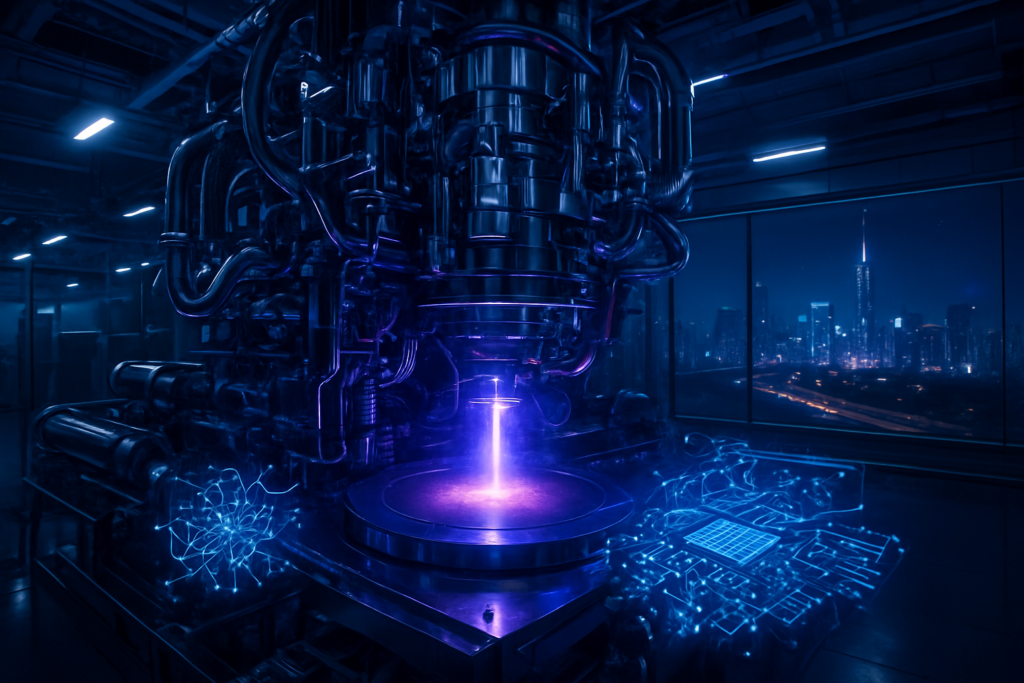
The Shenzhen prototype is the result of years of clandestine "hybrid engineering," where Chinese researchers and former European industry veterans deconstructed and reimagined the core components of EUV technology. Unlike the Laser-Produced Plasma (LPP) method used by ASML, which relies on high-powered CO2 lasers to hit tin droplets, the Chinese system reportedly utilizes a Laser-Induced Discharge Plasma (LDP) or a solid-state laser-driven source. Initial data suggests the prototype currently produces between 100W and 150W of power. While this is lower than the 250W+ standard required for high-volume manufacturing, it is more than sufficient to prove the viability of the domestic light source and beam delivery system.
The technical success is largely attributed to a talent-poaching strategy that bypassed international labor restrictions. A team led by figures such as Lin Nan, a former senior researcher at ASML, reportedly utilized dozens of former Dutch and German engineers who worked under aliases within high-security compounds. These experts helped the Chinese Academy of Sciences and Huawei refine the light-source conversion efficiency (CE) to approximately 3.42%, approaching the 5.5% industry benchmark. The prototype itself is massive, reportedly filling nearly an entire factory floor, as it utilizes larger, less integrated components to achieve the necessary precision while domestic miniaturization techniques catch up.
The most difficult hurdle remains the precision optics. ASML relies on mirrors from Carl Zeiss AG that are accurate to within the width of a single atom. To circumvent the lack of German glass, the Shenzhen team has employed a "distributed aperture" approach, using multiple smaller, domestically produced mirrors and advanced AI-driven alignment algorithms to compensate for surface irregularities. This software-heavy solution to a hardware problem is a hallmark of the new Chinese strategy, differentiating it from the pure hardware-focused precision of Western lithography.
Market Disruption and the Impact on Global Tech Giants
The immediate fallout of the Shenzhen prototype has been felt most acutely in the boardrooms of the "Big Three" lithography and chip firms. ASML (NASDAQ: ASML) saw its stock fluctuate as analysts revised 2026 and 2027 revenue forecasts, fearing the eventual loss of the Chinese market—which formerly accounted for nearly 20% of its business. While ASML still maintains a massive lead in High-NA (Numerical Aperture) EUV technology, the realization that China can produce "good enough" EUV for domestic needs threatens the long-term premium on Western equipment.
For Chinese domestic players, the breakthrough is a catalyst for growth. Companies like Naura Technology Group (SHE: 002371) and Semiconductor Manufacturing International Corporation (HKG: 0981), better known as SMIC, are expected to be the primary beneficiaries of this "Manhattan Project" output. SMIC is reportedly already preparing its fabrication lines for the first integration tests of the Shenzhen prototype’s subsystems. This development also provides a massive strategic advantage to Huawei, which has transitioned from a telecommunications giant to the de facto architect of China’s independent semiconductor ecosystem, coordinating the supply chain for these new lithography machines.
Conversely, the development poses a complex challenge for American firms like Nvidia (NASDAQ: NVDA) and Intel (NASDAQ: INTC). While they currently benefit from the US-led export restrictions that hamper their Chinese competitors, the emergence of a domestic Chinese EUV capability could eventually lead to a glut of advanced chips in the Asian market, driving down global margins. Furthermore, the success of China’s reverse-engineering efforts suggests that the "moat" around Western IP may be thinner than previously estimated, potentially leading to more aggressive patent litigation in international courts.
A New Chapter in the Global AI and Silicon Landscape
The broader significance of this breakthrough cannot be overstated; it represents a fundamental shift in the AI landscape. Advanced AI models, from LLMs to autonomous systems, are entirely dependent on the high-density transistors that only EUV lithography can provide. By cracking the EUV code, China is not just making chips; it is securing the foundational infrastructure required for AI supremacy. This achievement is being compared to the 1964 "596" nuclear test, a moment of national pride that signals China's refusal to be sidelined by international technology regimes.
However, the "Chinese Manhattan Project" strategy also raises significant concerns regarding intellectual property and the future of global R&D collaboration. The use of former ASML engineers and the reliance on secondary-market components for reverse engineering highlights a widening rift in engineering ethics and international law. Critics argue that this success validates "IP theft as a national strategy," while proponents in Beijing frame it as a necessary response to "technological bullying" by the United States. This divergence ensures that the semiconductor industry will remain the primary theater of geopolitical conflict for the remainder of the decade.
Compared to previous milestones, such as SMIC’s successful 7nm production using older DUV (Deep Ultraviolet) machines, the EUV prototype is a much higher "wall" to have scaled. DUV multi-patterning was an exercise in optimization; EUV is an exercise in fundamental physics. By mastering the 13.5nm wavelength, China has moved from being a fast-follower to a genuine contender in the most difficult manufacturing process ever devised by humanity.
The Road to 2028: Challenges and Next Steps
The path from a laboratory prototype to a production-grade machine is fraught with engineering hurdles. The most pressing challenge for the Shenzhen team is "yield and reliability." A prototype can etch a few circuits in a controlled environment, but a commercial machine must operate 24/7 with 99% uptime and produce millions of chips with minimal defects. Experts predict that the next two years will be focused on "hardening" the system—miniaturizing the power supplies, improving the vacuum chambers, and perfecting the "mask" technology that defines the chip patterns.
Near-term developments will likely include the deployment of "Alpha" versions of these machines to SMIC’s specialized "black sites" for experimental runs. We can also expect to see China ramp up its domestic production of ultra-pure chemicals and photoresists, the "ink" of the lithography process, which are currently still largely imported from Japan. The 2028 production target is aggressive but, given the progress made since 2023, no longer dismissed as impossible by Western intelligence.
The ultimate goal is the 2030 milestone of mass-market, entirely "un-Sinoed" (China-independent) advanced chips. If achieved, this would effectively render current US export controls obsolete. Analysts are closely watching for any signs of "Beta" testing in Shenzhen, as well as potential diplomatic or trade retaliations from the Netherlands and the US, which may attempt to tighten restrictions on the sub-components that China still struggles to manufacture domestically.
Conclusion: A Paradigm Shift in Semiconductor Sovereignty
The completion of the Shenzhen EUV prototype is a landmark event in the history of technology. It proves that despite the most stringent sanctions in the history of the semiconductor industry, a focused, state-funded effort can overcome immense technical barriers through a combination of talent acquisition, reverse engineering, and sheer national will. The "Chinese Manhattan Project" has moved from a theoretical threat to a functional reality, signaling the end of the Western monopoly on the tools used to build the future.
As we move into 2026, the key takeaway is that the "chip gap" is closing faster than many anticipated. While China still faces a grueling journey to achieve commercial yields and reliable mass production, the fundamental physics of EUV are now within their grasp. In the coming months, the industry should watch for updates on the Shenzhen team’s optics breakthroughs and any shifts in the global talent market, as the race for the next generation of engineers becomes even more contentious. The silicon curtain has been drawn, and on the other side, a new era of semiconductor competition has begun.
This content is intended for informational purposes only and represents analysis of current AI developments.
TokenRing AI delivers enterprise-grade solutions for multi-agent AI workflow orchestration, AI-powered development tools, and seamless remote collaboration platforms.
For more information, visit https://www.tokenring.ai/.