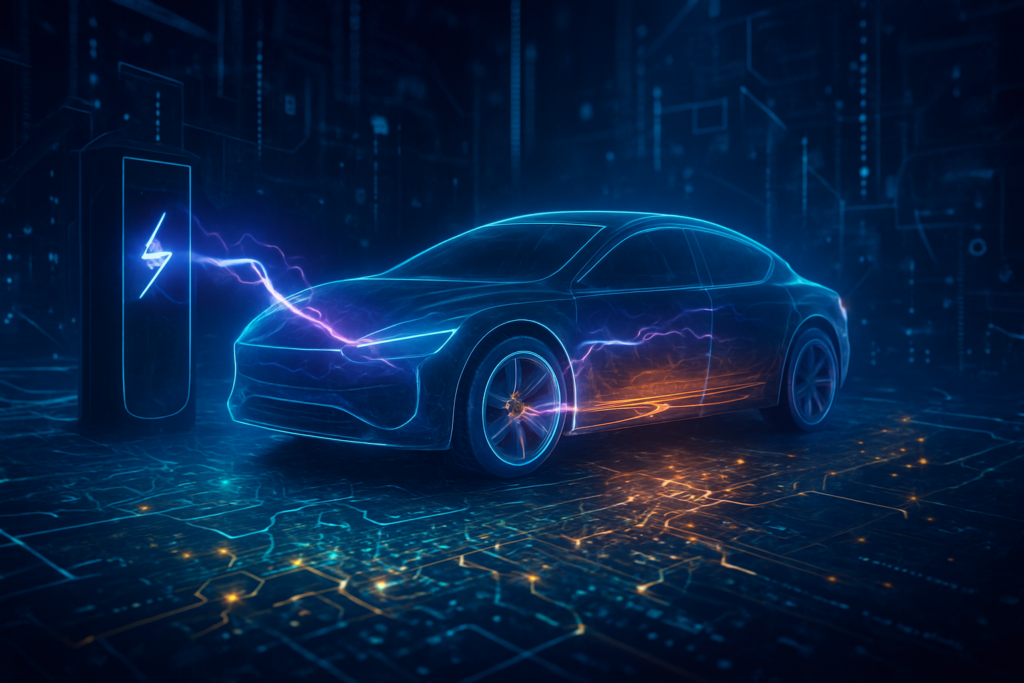
As of January 2026, the global transition to electric vehicles (EVs) has reached a pivotal milestone, driven not just by battery chemistry, but by a revolution in power electronics. The widespread adoption of Silicon Carbide (SiC) has officially ended the era of traditional silicon-based power systems in high-performance and mid-market vehicles. This shift, underpinned by a massive scaling of production from industry leaders and the integration of AI-driven power management, has fundamentally altered the economics of the automotive industry. By enabling 800V architectures to become the standard for vehicles under $40,000, SiC technology has effectively eliminated "range anxiety" and "charging dread," paving the way for the next phase of global electrification.
The immediate significance of this development lies in the unprecedented convergence of hardware efficiency and software intelligence. While SiC provides the physical ability to handle higher voltages and temperatures with minimal energy loss, new AI-optimized thermal management systems are now capable of predicting load demands in real-time, adjusting switching frequencies to squeeze every possible mile out of a battery pack. For the consumer, this translates to 10-minute charging sessions and an average range increase of 10% compared to previous generations, marking 2026 as the year EVs finally achieved total operational parity with internal combustion engines.
The technical superiority of Silicon Carbide over traditional Silicon (Si) stems from its wider bandgap, which allows it to operate at significantly higher voltages, temperatures, and switching frequencies. In January 2026, the industry has successfully transitioned to 200mm (8-inch) wafer production as the baseline standard. This move from 150mm wafers has been the "holy grail" of the mid-2020s, providing a 1.8x increase in working chips per wafer and driving down per-unit costs by nearly 40%. Leading the charge, STMicroelectronics (NYSE: STM) has reached full mass-production capacity at its Catania Silicon Carbide Campus in Italy. This facility represents the world’s first fully vertically integrated SiC site, managing the entire lifecycle from raw powder to finished power modules, ensuring a level of quality control and supply chain resilience that was previously impossible.
Technical specifications for 2026 models highlight the impact of this hardware. New 4th Generation STPOWER SiC MOSFETs feature drastically reduced on-resistance ($R_{DS(on)}$), which minimizes heat generation during the high-speed energy transfers required for 800V charging. This differs from previous Silicon IGBT technology, which suffered from significant "switching losses" and required massive, heavy cooling systems. By contrast, SiC-based inverters are 50% smaller and 30% lighter, allowing engineers to reclaim space for larger cabins or more aerodynamic designs. Industry experts and the power electronics research community have hailed the recent stability of 200mm yields as the "industrialization of a miracle material," noting that the defect rates in SiC crystals—long a hurdle for the industry—have finally reached automotive-grade reliability levels across all major suppliers.
The shift to SiC has created a new hierarchy among semiconductor giants and automotive OEMs. STMicroelectronics currently holds a dominant market share of approximately 35-40%, largely due to its long-standing partnership with Tesla (NASDAQ: TSLA) and a strategic joint venture with Sanan Optoelectronics in China. This JV has successfully ramped up to 480,000 wafers annually, securing ST’s position in the world’s largest EV market. Meanwhile, Infineon Technologies (ETR:IFX) has asserted its dominance in the manufacturing space with its Kulim Mega-Fab in Malaysia, now the world’s largest 200mm SiC power semiconductor facility. Infineon’s recent demonstration of a 300mm (12-inch) pilot line in Villach, Austria, has sent shockwaves through the market, signaling that even greater cost reductions are on the horizon.
Other major players like onsemi (NASDAQ: ON) have solidified their standing through multi-year supply agreements with the Volkswagen Group (XETRA:VOW3) and Hyundai-Kia. The strategic advantage now lies with companies that can provide "vertical integration"—owning the substrate production as well as the chip design. This has led to a competitive squeeze for smaller startups and traditional silicon suppliers who failed to pivot early enough. Wolfspeed (NYSE: WOLF), despite a difficult financial restructuring in late 2025, remains a critical lynchpin as a primary supplier of high-quality SiC substrates to the rest of the industry. The disruption is also felt in the charging infrastructure sector, where companies are being forced to upgrade to SiC-based ultra-fast 500kW chargers to support the new 800V vehicle fleets.
Beyond the technical and corporate maneuvering, the SiC revolution is a cornerstone of the broader "Intelligent Edge" trend in AI and energy. In 2026, we are seeing the emergence of "AI-Power Fusion," where machine learning models are embedded directly into the motor control units. These AI agents use the high-frequency switching capabilities of SiC to perform "micro-optimizations" thousands of times per second, adjusting the power flow based on road conditions, battery health, and driver behavior. This level of granular control was physically impossible with older silicon hardware, which couldn't switch fast enough without overheating.
This advancement fits into a larger global narrative of sustainable AI. As data centers and EVs both demand more power, the efficiency of SiC becomes an environmental necessity. By reducing the energy wasted as heat, SiC-equipped EVs are effectively reducing the total load on the power grid. However, concerns remain regarding the concentration of the supply chain. With a handful of companies and regions (notably Italy, Malaysia, and China) controlling the bulk of SiC production, geopolitical tensions continue to pose a risk to the "green transition." Comparisons are already being made to the early days of the microprocessor boom; just as silicon defined the 20th century, Silicon Carbide is defining the 21st-century energy landscape.
Looking forward, the roadmap for Silicon Carbide is focused on the "300mm Frontier." While 200mm is the current standard, the transition to 300mm wafers—led by Infineon—is expected to reach high-volume commercialization by 2028, potentially cutting EV drivetrain costs by another 20-30%. On the horizon, we are also seeing the first pilot programs for 1500V systems, pioneered by BYD Company (HKEX:1211). These ultra-high-voltage systems could enable heavy-duty trucking and even short-haul electric aviation to become commercially viable by the end of the decade.
The integration of AI into the manufacturing process itself is another key development. Companies are now using generative AI to design the next generation of SiC crystal growth furnaces, aiming to eliminate the remaining lattice defects that can lead to chip failure. The primary challenge remains the raw material supply; as demand for SiC expands into renewable energy grids and industrial automation, the race to secure high-quality carbon and silicon sources will intensify. Experts predict that by 2030, SiC will not just be an "EV chip," but the universal backbone of the global electrical infrastructure.
The Silicon Carbide revolution represents one of the most significant shifts in the history of power electronics. By successfully scaling production and moving to the 200mm wafer standard, companies like STMicroelectronics and Infineon have removed the final barriers to mass-market EV adoption. The combination of faster charging, longer range, and lower costs has solidified the electric vehicle’s position as the primary mode of transportation for the future.
As we move through 2026, keep a close watch on the progress of Infineon’s 300mm pilot lines and the expansion of STMicroelectronics' Chinese joint ventures. These developments will dictate the pace of the next wave of price cuts in the EV market. The "Silicon Pulse" is beating faster than ever, and it is powered by a material that was once considered too difficult to manufacture, but is now the very engine of the electric revolution.
This content is intended for informational purposes only and represents analysis of current AI and technology developments.
TokenRing AI delivers enterprise-grade solutions for multi-agent AI workflow orchestration, AI-powered development tools, and seamless remote collaboration platforms.
For more information, visit https://www.tokenring.ai/.