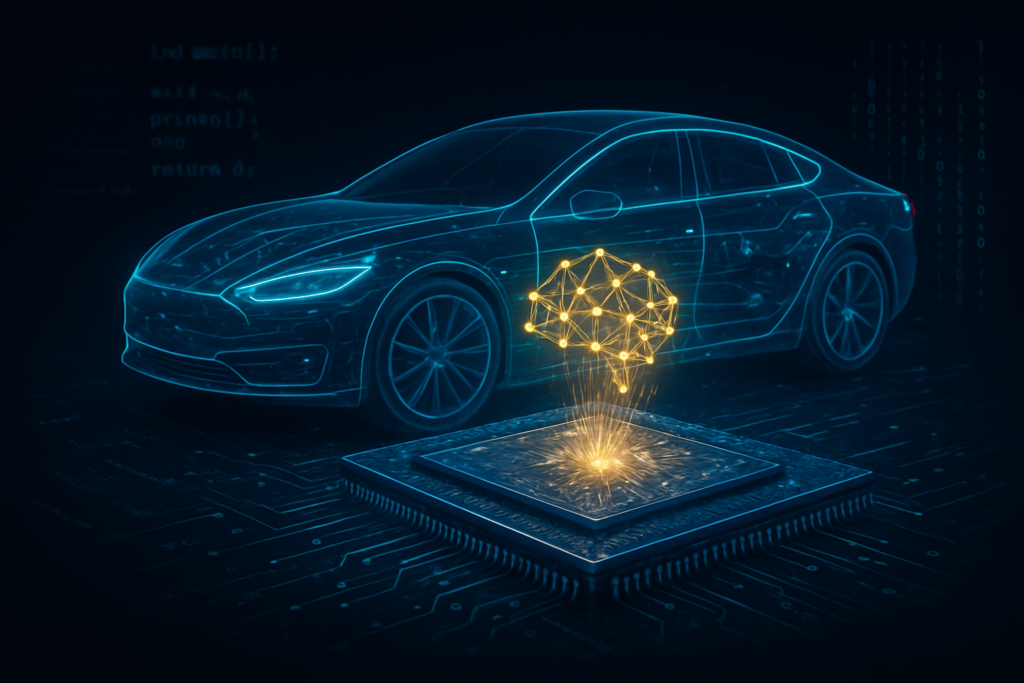
As of January 2026, the global automotive industry has reached a pivotal turning point in its architectural evolution. What was once a landscape dominated by proprietary instruction sets has transformed into a competitive "three-pillar" ecosystem, with the open-source RISC-V architecture now commanding a staggering 25% of all new automotive silicon unit shipments. This shift was underscored yesterday, January 12, 2026, by a landmark announcement from Quintauris—the joint venture powerhouse backed by Robert Bosch GmbH, BMW (OTC:BMWYY), Infineon Technologies (OTC:IFNNY), NXP Semiconductors (NASDAQ: NXPI), and Qualcomm (NASDAQ: QCOM)—which solidified a strategic partnership with SiFive to standardize high-performance RISC-V IP across next-generation zonal controllers and Advanced Driver Assistance Systems (ADAS).
The immediate significance of this development cannot be overstated. For decades, automakers were beholden to the rigid product roadmaps of proprietary chip designers. Today, the rise of the Software-Defined Vehicle (SDV) has necessitated a level of hardware flexibility that only open-source silicon can provide. By leveraging RISC-V, major manufacturers are no longer just buying chips; they are co-designing the very brains of their vehicles to optimize for artificial intelligence, real-time safety, and unprecedented energy efficiency. This transition marks the end of the "black box" era in automotive engineering, ushering in a period of transparency and custom-tailored performance that is reshaping the competitive landscape of the 2020s.
Breaking the Proprietary Barrier: Technical Maturity and Safety Standards
The technical maturation of RISC-V in the automotive sector has been accelerated by the widespread adoption of the RVA23 profile, which was finalized in late 2025. This standard has solved the "fragmentation" problem that once plagued open-source hardware by ensuring binary compatibility across different silicon vendors. Engineers can now develop software stacks that are portable across chips from diverse suppliers, effectively ending vendor lock-in. Furthermore, the integration of the MICROSAR Classic (AUTOSAR) stack onto the RISC-V reference platform has removed the final technical hurdle for Tier-1 suppliers who were previously hesitant to migrate their legacy safety-critical software.
One of the most impressive technical milestones of the past year is the achievement of ISO 26262 ASIL-D certification—the highest level of automotive safety—by multiple RISC-V IP providers, including Nuclei System Technology and SiFive. This allows RISC-V processors to manage critical functions like steer-by-wire and autonomous braking, which require near-zero failure rates. Unlike traditional architectures, RISC-V allows for "Custom AI Kernels," enabling automakers to add specific instructions directly into the processor to accelerate neural network layers for object detection and sensor fusion. This bespoke approach allows for a 30% to 50% increase in AI inference efficiency compared to off-the-shelf general-purpose processors.
Initial reactions from the research community have been overwhelmingly positive. Dr. Elena Rossetti, a lead researcher in autonomous systems, noted that "the ability to audit the instruction set architecture at a granular level provides a security and safety transparency that was simply impossible with closed systems." Industry experts point to the launch of the MIPS S8200 NPU by MIPS, now a subsidiary of GlobalFoundries (NASDAQ: GFS), as a prime example of how RISC-V is being utilized for "Physical AI"—the intersection of heavy-duty compute and real-time robotic control required for Level 4 autonomy.
Strategic Realignment: Winners and Losers in the Silicon War
The business implications of the RISC-V surge are profound, particularly for the established giants of the semiconductor industry. While Arm has historically dominated the mobile and automotive markets, the rise of Quintauris has created a formidable counterweight. Companies like NXP (NASDAQ: NXPI) and Infineon (OTC:IFNNY) are strategically positioning themselves as dual-architecture providers, offering both Arm and RISC-V solutions to hedge their bets. Meanwhile, Qualcomm (NASDAQ: QCOM) has utilized RISC-V to aggressively expand its "Snapdragon Digital Chassis," integrating open-source cores into its cockpit and ADAS platforms to offer more competitive pricing to OEMs.
Startups and specialized AI chipmakers are also finding significant strategic advantages. Tenstorrent, led by industry legend Jim Keller, recently launched the Ascalon-X processor, which demonstrates performance parity with high-end server chips while maintaining the power envelope required for vehicle integration. This has put immense pressure on traditional AI hardware providers, as automakers now have the option to build their own custom AI accelerators using Tenstorrent’s RISC-V templates. The disruption is most visible in the pricing models; BMW (OTC:BMWYY) reported a 30% reduction in system costs by consolidating multiple electronic control units (ECUs) into a single, high-performance RISC-V-powered zonal controller.
Tesla (NASDAQ: TSLA) remains a wild card in this environment. While the company continues to maintain its own custom silicon path, industry insiders suggest that the upcoming AI6 chips, slated for late 2026, will incorporate RISC-V for specific low-latency inference tasks. This move reflects a broader industry trend where even the most vertically integrated companies are turning to open standards to reduce research and development cycles and tap into a global pool of open-source talent.
The Global Landscape: Geopolitics and the SDV Paradigm
Beyond the technical and financial metrics, the rise of RISC-V is a key narrative in the broader geopolitical tech race. China has emerged as a leader in RISC-V adoption, with over 50% of its new automotive silicon based on the architecture as of early 2026. This move is largely driven by a desire for "silicon sovereignty"—minimizing reliance on Western-controlled proprietary technologies. However, the success of the European and American-led Quintauris venture shows that the West is equally committed to the architecture, viewing it as a tool for rapid innovation rather than just a defensive measure.
The significance of RISC-V is inextricably linked to the Software-Defined Vehicle (SDV) trend. In an SDV, the hardware must be a flexible foundation for software that will be updated over the air (OTA) for over a decade. The partnership between RISC-V vendors and simulation leaders like Synopsys (NASDAQ: SNPS) has enabled a "Shift-Left" development methodology. Automakers can now create "Digital Twins" of their RISC-V hardware, allowing them to test 90% of their vehicle's software in virtual environments months before the physical chips even arrive from the foundry. This has slashed time-to-market for new vehicle models from five years to under three.
Comparing this to previous milestones, such as the introduction of the first CAN bus or the arrival of Tesla’s initial FSD computer, the RISC-V transition is more foundational. It isn't just a new product; it is a new way of building technology. However, concerns remain regarding the long-term governance of the open-source ecosystem. As more critical infrastructure moves to RISC-V, the industry must ensure that the RISC-V International body remains neutral and capable of managing the complex needs of a global, multi-billion-dollar supply chain.
The Road Ahead: 2027 and the Push for Full Autonomy
Looking toward the near-term future, the industry is bracing for the mass implementation of RISC-V in Level 4 autonomous driving platforms. Mobileye (NASDAQ: MBLY), which began mass production of its EyeQ Ultra SoC featuring 12 RISC-V cores in 2025, is expected to see its first wide-scale deployments in luxury fleets by mid-2026. These chips represent the pinnacle of current RISC-V capability, handling hundreds of trillions of operations per second while maintaining the rigorous thermal and safety standards of the automotive environment.
Predicting the next two years, experts anticipate a surge in "Chiplet" architectures. Instead of one giant chip, future vehicle processors will likely consist of multiple smaller "chiplets"—perhaps an Arm-based general-purpose processor paired with multiple RISC-V AI accelerators and real-time safety islands. The challenge moving forward will be the standardization of the interconnects between these pieces. If the industry can agree on an open chiplet standard to match the open instruction set, the cost of developing custom automotive silicon could drop by another 50%, making high-level AI features standard even in budget-friendly vehicles.
Conclusion: A New Era of Automotive Innovation
The rise of RISC-V signifies the most radical shift in automotive electronics in forty years. By moving from closed, proprietary systems to an open, extensible architecture, the industry has unlocked a new level of innovation that is essential for the era of AI and software-defined mobility. The key takeaways from early 2026 are clear: RISC-V is no longer an experiment; it is the "gold standard" for companies seeking to lead in the SDV market.
This development will likely be remembered as the moment the automotive industry regained control over its own technological destiny. As we look toward the coming weeks and months, the focus will shift to the first consumer delivery of vehicles powered by Quintauris-standardized silicon. For stakeholders across the tech and auto sectors, the message is undeniable: the future of the car is open, and it is powered by RISC-V.
This content is intended for informational purposes only and represents analysis of current AI and automotive developments.
TokenRing AI delivers enterprise-grade solutions for multi-agent AI workflow orchestration, AI-powered development tools, and seamless remote collaboration platforms.
For more information, visit https://www.tokenring.ai/.