As we reach the close of 2025, the personal computer landscape has undergone its most radical transformation since the introduction of the graphical user interface. At the heart of this shift is the Microsoft (NASDAQ: MSFT) Copilot+ PC initiative—a bold attempt to decentralize artificial intelligence by moving heavy processing from the cloud to the desk. What began as a controversial and hardware-constrained launch in 2024 has matured into a stable, high-performance ecosystem that has fundamentally redefined consumer expectations for privacy and local compute.
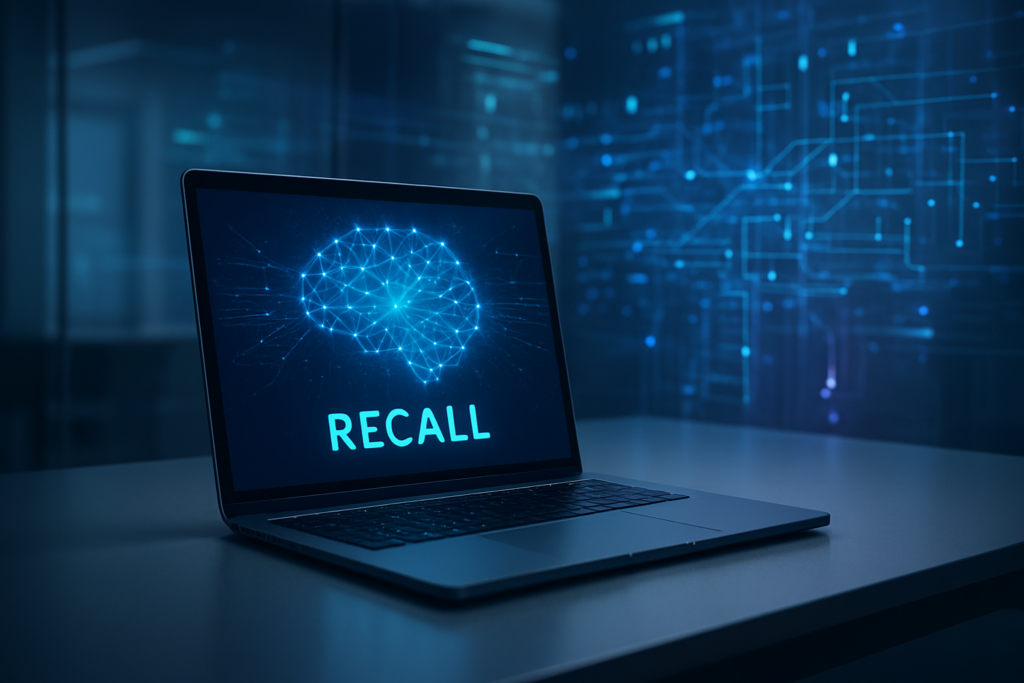
The journey to this point was anything but smooth. Microsoft’s vision for the "AI PC" was nearly derailed by its own ambition, specifically the "Recall" feature—a photographic memory tool that promised to record everything a user sees and does. After a year of intense security scrutiny, a complete architectural overhaul, and a strategic delay that pushed the feature’s general release into 2025, Microsoft has finally managed to turn a potential privacy nightmare into the gold standard for secure, on-device AI.
The 40 TOPS Threshold: Silicon’s New Minimum Wage
The defining characteristic of a Copilot+ PC is not its software, but its silicon. Microsoft established a strict hardware baseline requiring a Neural Processing Unit (NPU) capable of at least 40 Trillions of Operations Per Second (TOPS). This requirement effectively drew a line in the sand, separating legacy hardware from the new generation of AI-native devices. In early 2024, Qualcomm (NASDAQ: QCOM) held a temporary monopoly on this standard with the Snapdragon X Elite, boasting a 45 TOPS Hexagon NPU. However, by late 2025, the market has expanded into a fierce three-way race.
Intel (NASDAQ: INTC) responded aggressively with its Lunar Lake architecture (Core Ultra 200V), which hit the market in late 2024 and early 2025. By eliminating hyperthreading to prioritize efficiency and delivering 47–48 TOPS on the NPU alone, Intel managed to reclaim its dominance in the enterprise laptop segment. Not to be outdone, Advanced Micro Devices (NASDAQ: AMD) launched its Strix Point (Ryzen AI 300) series, pushing the envelope to 50–55 TOPS. This hardware arms race has made features like real-time "Live Captions" with translation, "Cocreator" image generation, and the revamped "Recall" possible without the latency or privacy risks associated with cloud-based AI.
This shift represents a departure from the "Cloud-First" mantra that dominated the last decade. Unlike previous AI integrations that relied on massive data centers, Copilot+ PCs utilize Small Language Models (SLMs) like Phi-3, which are optimized to run entirely on the NPU. This ensures that even when a device is offline, its AI capabilities remain fully functional, providing a level of reliability that traditional web-based services cannot match.
The Silicon Wars and the End of the x86 Hegemony
The Copilot+ initiative has fundamentally altered the competitive dynamics of the semiconductor industry. For the first time in decades, the Windows ecosystem is no longer synonymous with x86 architecture. Qualcomm's successful entry into the high-end laptop space forced both Intel and AMD to prioritize power efficiency and AI performance over raw clock speeds. This "ARM-ification" of Windows has brought MacBook-like battery life—often exceeding 20 hours—to the PC side of the aisle, a feat previously thought impossible.
For Microsoft, the strategic advantage lies in ecosystem lock-in. By tying advanced AI features to specific hardware requirements, they have created a powerful incentive for a massive hardware refresh cycle. This was perfectly timed with the October 2025 end-of-support for Windows 10, which acted as a catalyst for IT departments worldwide to migrate to Copilot+ hardware. While Apple (NASDAQ: AAPL) continues to lead the consumer segment with its "Apple Intelligence" across the M-series chips, Microsoft has solidified its grip on the corporate world by offering a more diverse range of hardware from partners like Dell, HP, and Lenovo.
From "Privacy Nightmare" to Secure Enclave: The Redemption of Recall
The most significant chapter in the Copilot+ saga was the near-death experience of the Recall feature. Originally slated for a June 2024 release, Recall was lambasted by security researchers for storing unencrypted screenshots in an easily accessible database. The fallout was immediate, forcing Microsoft to pull the feature and move it into a year-long "quarantine" within the Windows Insider Program.
The version of Recall that finally reached general availability in April 2025 is a vastly different beast. Microsoft moved the entire operation into Virtualization-Based Security (VBS) Enclaves—isolated environments that are invisible even to the operating system's kernel. Furthermore, the feature is now strictly opt-in, requiring biometric authentication via Windows Hello for every interaction. Data is encrypted "just-in-time," meaning the "photographic memory" of the PC is only readable when the user is physically present and authenticated.
This pivot was more than just a technical fix; it was a necessary cultural shift for Microsoft. By late 2025, the controversy has largely subsided, replaced by a cautious appreciation for the tool's utility. In a world where we are overwhelmed by digital information, the ability to search for "that blue graph I saw in a meeting three weeks ago" using natural language has become a "killer app" for productivity, provided the user trusts the underlying security.
The Road to 2026: Agents and the 100 TOPS Frontier
Looking ahead to 2026, the industry is already whispering about the next leap in hardware requirements. Rumors suggest that "Copilot+ Phase 2" may demand NPUs exceeding 100 TOPS to support "Autonomous Agents"—AI entities capable of navigating the OS and performing multi-step tasks on behalf of the user, such as "organizing a travel itinerary based on my recent emails and booking the flights."
The challenge remains the "AI Tax." While premium laptops have embraced the 40+ TOPS standard, the budget segment still struggles with the high cost of the necessary RAM and NPU-integrated silicon. Experts predict that 2026 will see the democratization of these features, as second-generation AI chips become more affordable and the software ecosystem matures beyond simple image generation and search.
A New Baseline for Personal Computing
As we look back at the events of 2024 and 2025, the launch of Copilot+ PCs stands as a pivotal moment in AI history. It was the moment the industry realized that the future of AI isn't just in the cloud—it's in our pockets and on our laps. Microsoft's ability to navigate the Recall security crisis proved that privacy and utility can coexist, provided there is enough transparency and engineering rigor.
For consumers and enterprises alike, the takeaway is clear: the "PC" is no longer just a tool for running applications; it is a proactive partner. As we move into 2026, the watchword will be "Agency." We have moved from AI that answers questions to AI that remembers our work, and we are rapidly approaching AI that can act on our behalf. The Copilot+ PC was the foundation for this transition, and despite its rocky start, it has successfully set the stage for the next decade of computing.
This content is intended for informational purposes only and represents analysis of current AI developments.
TokenRing AI delivers enterprise-grade solutions for multi-agent AI workflow orchestration, AI-powered development tools, and seamless remote collaboration platforms.
For more information, visit https://www.tokenring.ai/.