As of late 2025, the smartphone is no longer just a portal to apps; it has become an autonomous digital executive. With the wide release of Siri 2.0 and the flagship iPhone 17 lineup, Apple (NASDAQ: AAPL) has successfully transitioned its iconic virtual assistant from a reactive voice-interface into a proactive "agentic" powerhouse. This shift, powered by the Apple Intelligence 2.0 suite, has not only silenced critics of Apple’s perceived "AI lag" but has also ignited what analysts are calling the "AI Supercycle," driving record-breaking hardware sales and fundamentally altering the relationship between users and their devices.
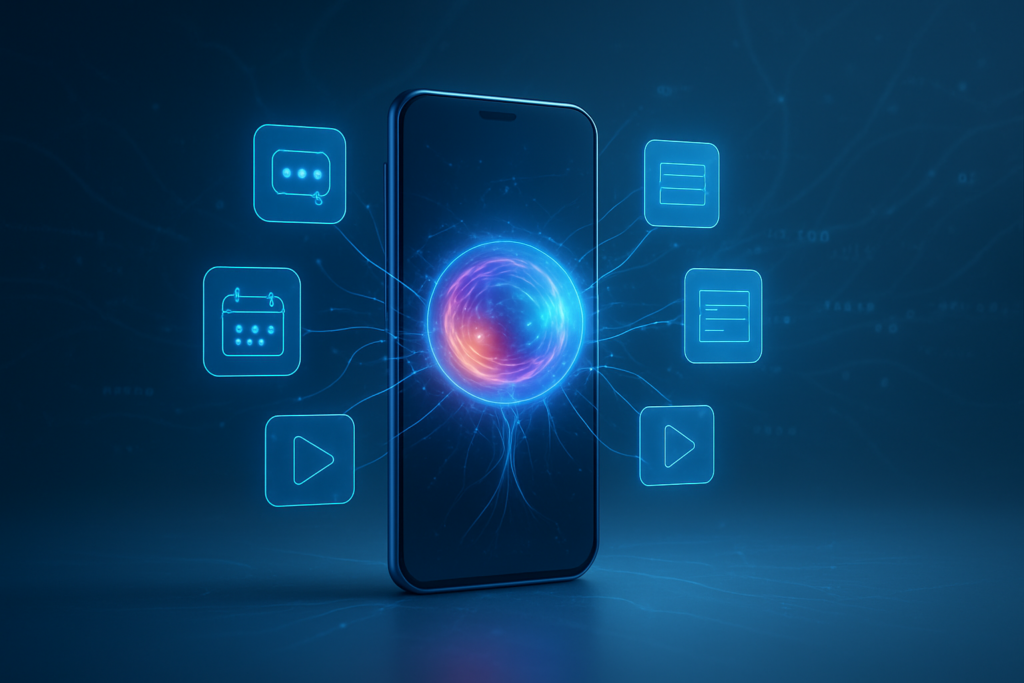
The immediate significance of Siri 2.0 lies in its ability to understand intent rather than just commands. By combining deep on-screen awareness with a cross-app action framework, Siri can now execute complex, multi-step workflows that previously required minutes of manual navigation. Whether it is retrieving a specific document from a buried email thread to summarize and Slack it to a colleague, or identifying a product on a social media feed and adding it to a shopping list, the "agentic" Siri operates with a level of autonomy that makes the traditional "App Store" model feel like a relic of the past.
The Technical Architecture of Autonomy
Technically, Siri 2.0 represents a total overhaul of the Apple Intelligence framework. At its core is the Semantic Index, an on-device map of a user’s entire digital life—spanning Messages, Mail, Calendar, and Photos. Unlike previous versions of Siri that relied on hardcoded intent-matching, Siri 2.0 utilizes a generative reasoning engine capable of "planning." When a user gives a complex instruction, the system breaks it down into sub-tasks, identifying which apps contain the necessary data and which APIs are required to execute the final action.
This leap in capability is supported by the A19 Pro silicon, manufactured on TSMC’s (NYSE: TSM) advanced 3nm (N3P) process. The chip features a redesigned 16-core Neural Engine specifically optimized for 3-billion-parameter local Large Language Models (LLMs). To support these memory-intensive tasks, Apple has increased the baseline RAM for the iPhone 17 Pro and the new "iPhone Air" to 12GB of LPDDR5X memory. For tasks requiring extreme reasoning power, Apple utilizes Private Cloud Compute (PCC)—a stateless, Apple-silicon-based server environment that ensures user data is never stored and is mathematically verifiable for privacy.
Initial reactions from the AI research community have been largely positive, particularly regarding Apple’s App Intents API. By forcing a standardized way for apps to communicate their functions to the OS, Apple has solved the "interoperability" problem that has long plagued agentic AI. Industry experts note that while competitors like OpenAI and Google (NASDAQ: GOOGL) have more powerful raw models, Apple’s deep integration into the operating system gives it a "last-mile" execution advantage that cloud-only agents cannot match.
A Seismic Shift in the Tech Landscape
The arrival of a truly agentic Siri has sent shockwaves through the competitive landscape. Google (NASDAQ: GOOGL) has responded by accelerating the rollout of Gemini 3 Pro and its "Gemini Deep Research" agent, integrated into the Pixel 10. Meanwhile, Microsoft (NASDAQ: MSFT) is pushing its "Open Agentic Web" vision, using GPT-5.2 to power autonomous background workers in Windows. However, Apple’s "privacy-first" narrative—centered on local processing—remains a formidable barrier for competitors who rely more heavily on cloud-based data harvesting.
The business implications for the App Store are perhaps the most disruptive. As Siri becomes the primary interface for completing tasks, the "App-as-an-Island" model is under threat. If a user can book a flight, order groceries, and send a gift via Siri without ever opening the respective apps, the traditional in-app advertising and discovery models begin to crumble. To counter this, Apple is reportedly exploring an "Apple Intelligence Pro" subscription tier, priced at $9.99/month, to capture value from the high-compute agentic features that define the new user experience.
Smaller startups in the "AI hardware" space, such as Rabbit and Humane, have largely been marginalized by these developments. The iPhone 17 has effectively absorbed the "AI Pin" and "pocket companion" use cases, proving that the smartphone remains the central hub of the AI era, provided it has the silicon and software integration to act as a true agent.
Privacy, Ethics, and the Semantic Index
The wider significance of Siri 2.0 extends into the realm of digital ethics and privacy. The Semantic Index essentially creates a "digital twin" of the user’s history, raising concerns about the potential for a "master key" to a person’s private life. While Apple maintains that this data never leaves the device in an unencrypted or persistent state, security researchers have pointed to the "network attack vector"—the brief window when data is processed via Private Cloud Compute.
Furthermore, the shift toward "Intent-based Computing" marks a departure from the traditional UI/UX paradigms that have governed tech for decades. We are moving from a "Point-and-Click" world to a "Declare-and-Delegate" world. While this increases efficiency, some sociologists warn of "cognitive atrophy," where users lose the ability to navigate complex digital systems themselves, becoming entirely reliant on the AI intermediary.
Comparatively, this milestone is being viewed as the "iPhone 4 moment" for AI—the point where the technology becomes polished enough for mass-market adoption. By standardizing the Model Context Protocol (MCP) and pushing for stateless cloud computing, Apple is not just selling phones; it is setting the architectural standards for the next decade of personal computing.
The 2026 Roadmap: Beyond the Phone
Looking ahead to 2026, the agentic features of Siri 2.0 are expected to migrate into Apple’s wearable and spatial categories. Rumors regarding visionOS 3.0 suggest the introduction of "Spatial Intelligence," where Siri will be able to identify physical objects in a user’s environment and perform actions based on them—such as identifying a broken appliance and automatically finding the repair manual or scheduling a technician.
The Apple Watch Series 12 is also predicted to play a major role, potentially featuring a refined "Visual Intelligence" mode that allows Siri to "see" through the watch, providing real-time fitness coaching and environmental alerts. Furthermore, a new "Home Hub" device, expected in March 2026, will likely serve as the primary "face" of Siri 2.0 in the household, using a robotic arm and screen to act as a central controller for the agentic home.
The primary challenge moving forward will be the "Hallucination Gap." As users trust Siri to perform real-world actions like moving money or sending sensitive documents, the margin for error becomes zero. Ensuring that agentic AI remains predictable and controllable will be the focus of Apple’s software updates throughout the coming year.
Conclusion: The Digital Executive Has Arrived
The launch of Siri 2.0 and the iPhone 17 represents a definitive turning point in the history of artificial intelligence. Apple has successfully moved past the era of the "chatty bot" and into the era of the "active agent." By leveraging its vertical integration of silicon, software, and services, the company has turned the iPhone into a digital executive that understands context, perceives the screen, and acts across the entire app ecosystem.
With record shipments of 247.4 million units projected for 2025, the market has clearly signaled its approval. As we move into 2026, the industry will be watching closely to see if Apple can maintain its privacy lead while expanding Siri’s agency into the home and onto the face. For now, the "AI Supercycle" is in full swing, and the smartphone has been reborn as the ultimate personal assistant.
This content is intended for informational purposes only and represents analysis of current AI developments.
TokenRing AI delivers enterprise-grade solutions for multi-agent AI workflow orchestration, AI-powered development tools, and seamless remote collaboration platforms.
For more information, visit https://www.tokenring.ai/.