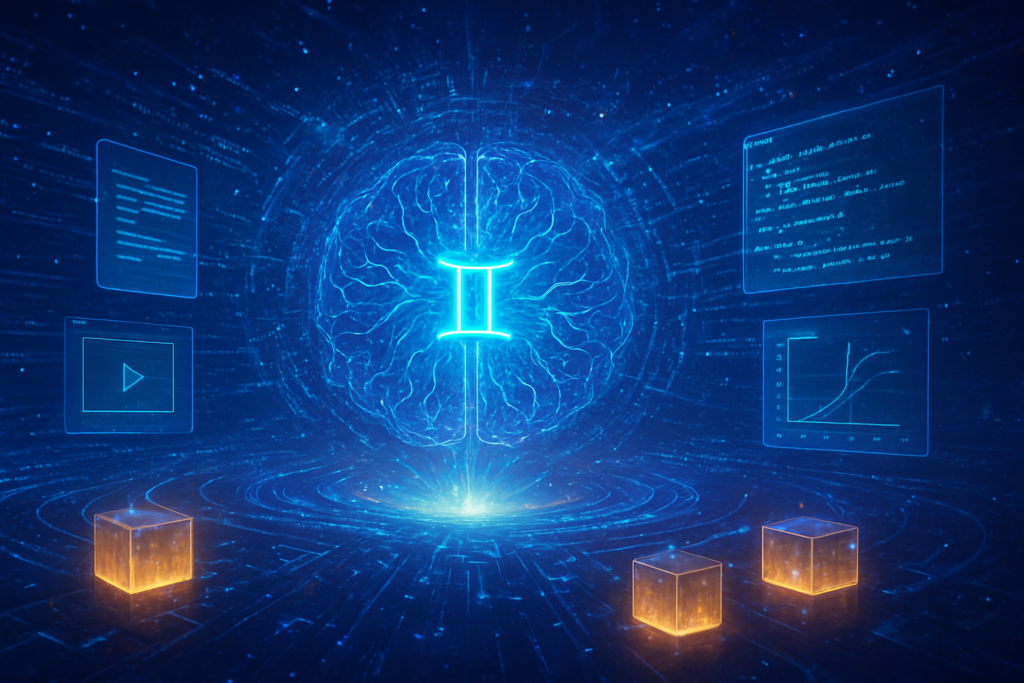
Alphabet Inc. (NASDAQ: GOOGL) has officially moved its groundbreaking 2-million-token context window for Gemini 1.5 Pro into general availability for all developers, marking a definitive shift in how the industry handles massive datasets. This milestone, bolstered by the integration of native context caching and sandboxed code execution, allows developers to process hours of video, thousands of pages of text, and massive codebases in a single prompt. By removing the waitlists and refining the economic model through advanced caching, Google is positioning Gemini 1.5 Pro as the primary engine for enterprise-grade, long-context reasoning.
The move represents a strategic consolidation of Google’s lead in "long-context" AI, a field where it has consistently outpaced rivals. For the global developer community, the availability of these features means that the architectural hurdles of managing large-scale data—which previously required complex Retrieval-Augmented Generation (RAG) pipelines—can now be bypassed for many high-value use cases. This development is not merely an incremental update; it is a fundamental expansion of the "working memory" available to artificial intelligence, enabling a new class of autonomous agents capable of deep, multi-modal analysis.
The Architecture of Infinite Memory: MoE and 99% Recall
At the heart of Gemini 1.5 Pro’s 2-million-token capability is a Sparse Mixture-of-Experts (MoE) architecture. Unlike traditional dense models that activate every parameter for every request, MoE models only engage a specific subset of their neural network, allowing for significantly more efficient processing of massive inputs. This efficiency is what enables the model to ingest up to two hours of 1080p video, 22 hours of audio, or over 60,000 lines of code without a catastrophic drop in performance. In industry-standard "Needle-in-a-Haystack" benchmarks, Gemini 1.5 Pro has demonstrated a staggering 99.7% recall rate even at the 1-million-token mark, maintaining near-perfect accuracy up to its 2-million-token limit.
Beyond raw capacity, the addition of Native Code Execution transforms the model from a passive text generator into an active problem solver. Gemini can now generate and run Python code within a secure, isolated sandbox environment. This allows the model to perform complex mathematical calculations, data visualizations, and iterative debugging in real-time. When a developer asks the model to analyze a massive spreadsheet or a physics simulation, Gemini doesn't just predict the next word; it writes the necessary script, executes it, and refines the output based on the results. This "inner monologue" of code execution significantly reduces hallucinations in data-sensitive tasks.
To make this massive context window economically viable, Google has introduced Context Caching. This feature allows developers to store frequently used data—such as a legal library or a core software repository—on Google’s servers. Subsequent queries that reference this "cached" data are billed at a fraction of the cost, often resulting in a 75% to 90% discount compared to standard input rates. This addresses the primary criticism of long-context models: that they were too expensive for production use. With caching, the 2-million-token window becomes a persistent, cost-effective knowledge base for specialized applications.
Shifting the Competitive Landscape: RAG vs. Long Context
The maturation of Gemini 1.5 Pro’s features has sent ripples through the competitive landscape, challenging the strategies of major players like OpenAI (NASDAQ: MSFT) and Anthropic, which is heavily backed by Amazon.com Inc. (NASDAQ: AMZN). While OpenAI’s GPT-4o and Anthropic’s Claude 3.5 Sonnet have focused on speed and "human-like" interaction, they have historically lagged behind Google in raw context capacity, with windows typically ranging between 128,000 and 200,000 tokens. Google’s 2-million-token offering is an order of magnitude larger, forcing competitors to accelerate their own long-context research or risk losing the enterprise market for "big data" AI.
This development has also sparked a fierce debate within the AI research community regarding the future of Retrieval-Augmented Generation (RAG). For years, RAG was the gold standard for giving LLMs access to large datasets by "retrieving" relevant snippets from a vector database. With a 2-million-token window, many developers are finding that they can simply "stuff" the entire dataset into the prompt, avoiding the complexities of vector indexing and retrieval errors. While RAG remains essential for real-time, ever-changing data, Gemini 1.5 Pro has effectively made it possible to treat the model’s context window as a high-speed, temporary database for static information.
Startups specializing in vector databases and RAG orchestration are now pivoting to support "hybrid" architectures. These systems use Gemini’s long context for deep reasoning across a specific project while relying on RAG for broader, internet-scale knowledge. This strategic advantage has allowed Google to capture a significant share of the developer market that handles complex, multi-modal workflows, particularly in industries like cinematography, where analyzing a full-length feature film in one go was previously impossible for any AI.
The Broader Significance: Video Reasoning and the Data Revolution
The broader significance of the 2-million-token window lies in its multi-modal capabilities. Because Gemini 1.5 Pro is natively multi-modal—trained on text, images, audio, video, and code simultaneously—it does not treat a video as a series of disconnected frames. Instead, it understands the temporal relationship between events. A security firm can upload an hour of surveillance footage and ask, "When did the person in the blue jacket leave the building?" and the model can pinpoint the exact timestamp and describe the action with startling accuracy. This level of video reasoning was a "holy grail" of AI research just two years ago.
However, this breakthrough also brings potential concerns, particularly regarding data privacy and the "Lost in the Middle" phenomenon. While Google’s benchmarks show high recall, some independent researchers have noted that LLMs can still struggle with nuanced reasoning when the critical information is buried deep within a 2-million-token prompt. Furthermore, the ability to process such massive amounts of data raises questions about the environmental impact of the compute power required to maintain these "warm" caches and run MoE models at scale.
Comparatively, this milestone is being viewed as the "Broadband Era" of AI. Just as the transition from dial-up to broadband enabled the modern streaming and cloud economy, the transition from small context windows to multi-million-token "infinite" memory is enabling a new generation of agentic AI. These agents don't just answer questions; they live within a codebase or a project, maintaining a persistent understanding of every file, every change, and every historical decision made by the human team.
Looking Ahead: Toward Gemini 3.0 and Agentic Workflows
As we look toward 2026, the industry is already anticipating the next leap. While Gemini 1.5 Pro remains the workhorse for 2-million-token tasks, the recently released Gemini 3.0 series is beginning to introduce "Implicit Caching" and even larger "Deep Research" windows that can theoretically handle up to 10 million tokens. Experts predict that the next frontier will not just be the size of the window, but the persistence of it. We are moving toward "Persistent State Memory," where an AI doesn't just clear its cache after an hour but maintains a continuous, evolving memory of a user's entire digital life or a corporation’s entire history.
The potential applications on the horizon are transformative. We expect to see "Digital Twin" developers that can manage entire software ecosystems autonomously, and "AI Historians" that can ingest centuries of digitized records to find patterns in human history that were previously invisible to researchers. The primary challenge moving forward will be refining the "thinking" time of these models—ensuring that as the context grows, the model's ability to reason deeply about that context grows in tandem, rather than just performing simple retrieval.
A New Standard for the AI Industry
The general availability of the 2-million-token context window for Gemini 1.5 Pro marks a turning point in the AI arms race. By combining massive capacity with the practical tools of context caching and code execution, Google has moved beyond the "demo" phase of long-context AI and into a phase of industrial-scale utility. This development cements the importance of "memory" as a core pillar of artificial intelligence, equal in significance to raw reasoning power.
As we move into 2026, the focus for developers will shift from "How do I fit my data into the model?" to "How do I best utilize the vast space I now have?" The implications for software development, legal analysis, and creative industries are profound. The coming months will likely see a surge in "long-context native" applications that were simply impossible under the constraints of 2024. For now, Google has set a high bar, and the rest of the industry is racing to catch up.
This content is intended for informational purposes only and represents analysis of current AI developments.
TokenRing AI delivers enterprise-grade solutions for multi-agent AI workflow orchestration, AI-powered development tools, and seamless remote collaboration platforms.
For more information, visit https://www.tokenring.ai/.