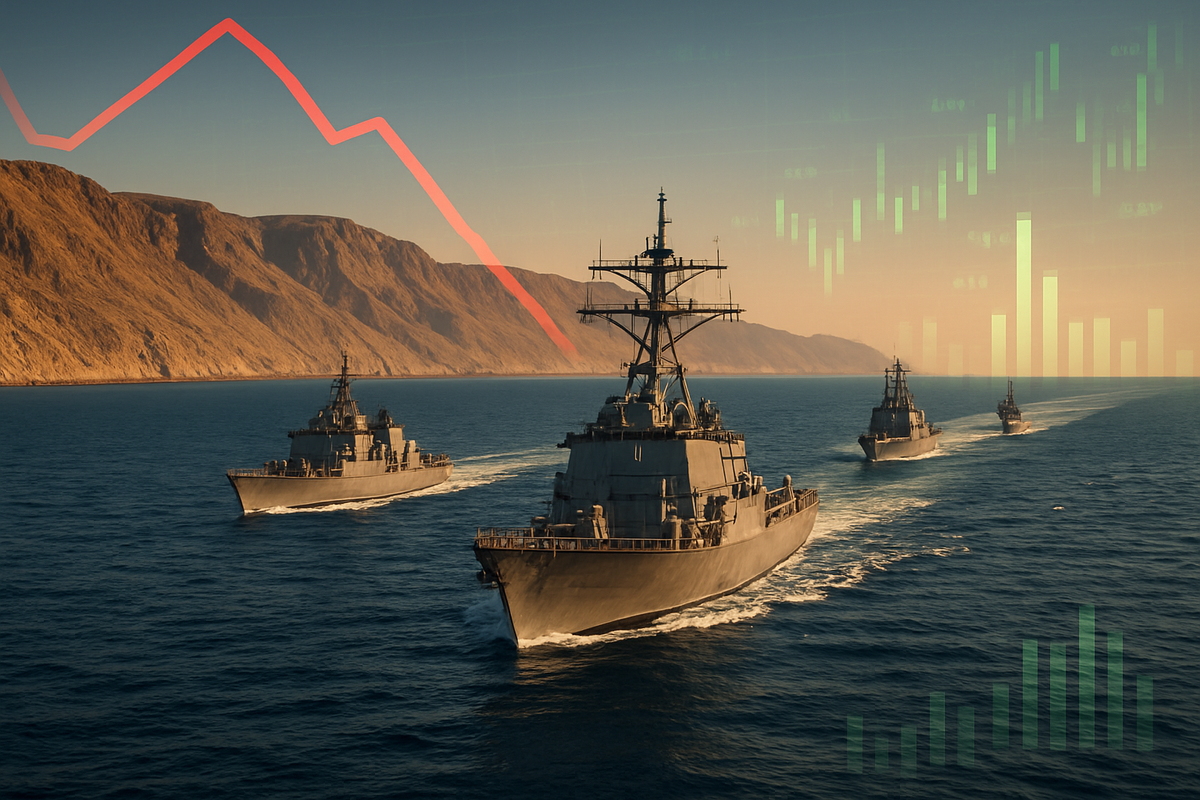
Global energy markets and equity indices experienced a seismic shift on Monday, March 16, 2026, as the United States announced the formalization of the "Hormuz Coalition." The multinational naval initiative, designed to break a weeks-long Iranian blockade of the world’s most critical maritime chokepoint, sent West Texas Intermediate (WTI) crude oil futures tumbling by more than 5% to settle at approximately $93.54 per barrel. The sudden cooling of the "war premium" that had gripped markets since late February provided a massive tailwind for the broader stock market, which recorded its strongest single-day performance in over a month.
The intervention effectively pulled oil prices back from the brink of triple digits, after they had peaked near $119 just one week prior. By signaling a military commitment to secure the Strait of Hormuz—through which roughly 20% of the world’s petroleum and liquefied natural gas (LNG) flows—the U.S. government eased systemic fears of a global energy famine. The ripple effects were immediate: inflation expectations moderated, and investors pivoted back into risk assets, betting that a stabilized energy corridor would prevent the Federal Reserve from pursuing even more restrictive monetary policies.
The Strategy Behind the Coalition and the Market’s Pivot
The formation of the Hormuz Coalition follows a period of intense regional volatility that began in late February 2026. After a series of maritime skirmishes led to a near-total halt of commercial traffic through the Strait, the Trump administration moved decisively to organize a multinational naval escort service. On the morning of March 16, the White House urged major energy-consuming nations, including China, France, Japan, South Korea, and the United Kingdom, to contribute warships to the effort, arguing that those most dependent on the passage must share the security burden.
Adding weight to the diplomatic maneuvering, the U.S. reportedly signaled a willingness to take kinetic action against Kharg Island—Iran’s primary export hub—should the blockade persist. This hardline stance was bolstered by a coordinated release of 400 million barrels of oil from the International Energy Agency (IEA) emergency reserves, a move that flooded the market with liquidity just as the coalition announcement provided the psychological floor. By mid-day trading, the "fear trade" had largely evaporated; WTI, which had opened the day above $102, plummeted by $5.17, while international benchmark Brent crude fell 2.8% to $100.21.
The market reaction was swift and decisive. The S&P 500 rose 1.2%, its best day since the conflict escalated on February 28. The Dow Jones Industrial Average added nearly 484 points, and the tech-heavy Nasdaq jumped 1.4%. Investors who had been hiding in cash and defensive sectors like utilities surged back into growth and transportation stocks, interpreting the naval coalition as a sign that the worst of the energy-driven inflationary spike might be in the rearview mirror.
Corporate Winners and the Energy Sector Shuffle
The sharp drop in crude prices created a clear "relief rally" for fuel-dependent industries. United Airlines (NASDAQ: UAL) saw its shares climb 4.2%, leading a broader surge in the aviation sector as lower jet fuel prices directly improved projected margins for the second quarter of 2026. Similarly, the leisure industry found new life, with Norwegian Cruise Line Holdings (NYSE: NCLH) jumping 5.1%. For these companies, fuel represents one of the largest variable costs; the stabilization of WTI below $95 per barrel significantly reduces the risk of fuel surcharges dampening consumer travel demand.
In the technology sector, the market's rally was spearheaded by mega-cap names that provide the backbone of the major indices. NVIDIA (NASDAQ: NVDA) rose 2.5%, and Meta Platforms (NASDAQ: META) climbed 3.2%, as the easing of inflation fears lowered the "discount rate" pressure on high-growth earnings. Even within the energy sector, there were unique winners. Sable Offshore (NYSE: SOC) saw its stock gain over 6%, reaching approximately $18.00 per share, following a related executive order to prioritize domestic production at the Santa Ynez field to further insulate the U.S. from Middle Eastern supply shocks.
Conversely, traditional oil majors faced a more nuanced day. While the broader market rally provided some support, Exxon Mobil (NYSE: XOM) and Chevron (NYSE: CVX) experienced downward pressure on their share prices due to the immediate contraction in crude margins. However, many analysts suggest that the return of stability and the potential for a resumption of normal shipping operations for global players like Maersk and Hapag-Lloyd will eventually benefit the integrated majors by reducing the extreme logistical costs and insurance premiums—which had recently spiked to 0.4% of hull value—associated with the regional conflict.
A New Era of Energy Security and Inflationary Relief
The "Hormuz Coalition" represents more than just a military maneuver; it is a significant shift in the global energy security paradigm. Historically, the U.S. has acted as the de facto guarantor of the Strait, but the 2026 strategy forces a burden-sharing model that could redefine international naval cooperation. This event mirrors the "Tanker War" of the 1980s but with much higher stakes, given the modern global economy's absolute reliance on just-in-time energy deliveries. The move has successfully dampened the immediate threat of "energy-push" hyper-inflation, which many economists feared would mirror the stagflationary environment of the 1970s.
From a regulatory standpoint, the coalition’s success may embolden more aggressive domestic energy policies. The coordination between the IEA and the U.S. Navy suggests a high level of synchronization between military and economic tools. If the coalition successfully keeps the Strait open, it may set a precedent for how the international community responds to "chokepoint diplomacy" in other regions, such as the South China Sea or the Bab el-Mandeb strait. For competitors and partners alike, the message is clear: the weaponization of energy supply will be met with a multi-pronged, multinational response.
Navigating the Volatile Path Ahead
While the March 16 announcement provided a much-needed reprieve, the situation remains highly fluid. Short-term risks include the reported deployment of Iranian naval mines and the use of "swarm" drone tactics, which could complicate the coalition's escort mission. Japan and Australia have also shown initial hesitation regarding the level of their involvement, citing constitutional and escalatory concerns. If the coalition fails to provide 100% security for commercial tankers, insurance premiums may remain prohibitively high, keeping the actual flow of oil lower than the market currently anticipates.
In the long term, investors should watch for a potential "strategic pivot" by global energy firms toward even more domestic and offshore production in safe waters. The market opportunity for defense contractors specializing in maritime security and drone deconfliction is expected to surge. Scenarios for the coming months range from a gradual return to $80 oil if the coalition holds, to a secondary spike if a direct military confrontation occurs on Kharg Island.
Market Outlook and Final Takeaways
The events of March 16, 2026, mark a turning point in the current geopolitical cycle. The 5% drop in WTI crude to $93.54 is a clear signal that the market values security and supply certainty above almost all else. The "Hormuz Coalition" has, at least temporarily, broken the back of a speculative rally that threatened to derail the global economy. For the average consumer, this could mean lower prices at the pump within weeks; for the investor, it represents a renewed opportunity to enter the market as the threat of runaway inflation recedes.
Moving forward, the primary metric for the market’s health will be the volume of successful transits through the Strait of Hormuz. Investors should keep a close eye on the "participation rate" of other nations in the coalition and any retaliatory measures from Tehran. While the relief rally has provided a welcome boost to the Dow and Nasdaq, the lasting impact of this intervention will depend on whether the naval shield can transform into a long-term diplomatic solution.
This content is intended for informational purposes only and is not financial advice.