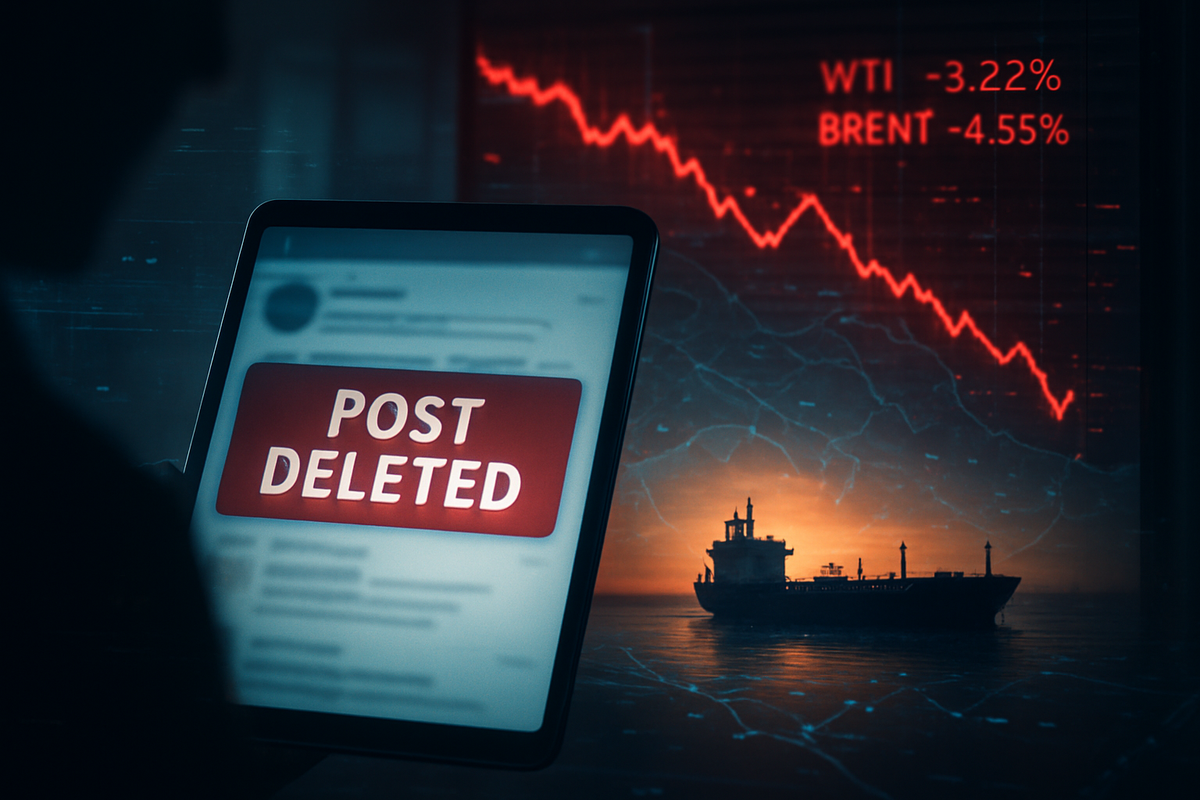
In a Tuesday that will be etched into the memory of commodities traders for years, a single social media post from US Energy Secretary Chris Wright sent global energy markets into a tailspin. On March 10, 2026, a post appeared on Wright’s official X account claiming that the US Navy had successfully escorted an oil tanker through the heavily contested Strait of Hormuz. The news, suggesting a de-escalation of the Iranian blockade and a restoration of global oil flows, triggered an immediate and violent reaction: WTI crude futures plummeted by 15%, while equity markets briefly surged on hopes that the era of $120 oil was over.
The relief was short-lived. Within twenty minutes, the tweet was deleted, and the White House issued a swift, categorical denial, clarifying that no such naval escort had occurred. The resulting "whipsaw" market action—where prices crashed and then partially rebounded in a matter of minutes—has left investors reeling and raised serious questions about the administration's communication protocols during times of geopolitical crisis. As of today, March 11, 2026, the market remains on high alert, with the "fear premium" returning to energy prices alongside a new layer of skepticism regarding official government communications.
The chaos began at approximately 10:15 AM ET on March 10, following days of escalating tensions in the Middle East that had pushed WTI crude to a 52-week high of nearly $120 per barrel. The post from Secretary Wright’s account read: "The U.S. Navy successfully escorted an oil tanker through the Strait of Hormuz to ensure oil remains flowing to global markets." Coming from the head of the Department of Energy, the statement was taken as gospel by algorithmic trading bots and human traders alike. WTI crude futures, which were trading around $118, collapsed instantly, at one point dropping as low as $77 per barrel as long positions were liquidated in a panic.
The timeline of the disaster was brief but devastating. Between 10:15 AM and 10:40 AM, the tweet went viral across news wires and financial terminals. By 10:45 AM, the tweet vanished. Shortly thereafter, White House Press Secretary Karoline Leavitt addressed the burgeoning crisis, stating, "The U.S. Navy has not escorted a tanker or a vessel at this time." A spokesperson for the Department of Energy later attributed the post to a "staff error," claiming a video clip of a routine exercise had been incorrectly captioned and posted prematurely. By the time the markets closed, an estimated $84 million had been wiped from the United States Oil Fund (NYSE Arca:USO) alone due to the volatility.
The fallout from the "Wright Tweet" created a stark divide between those who benefited from the momentary dip and those who were crushed by the reversal. Major integrated oil companies like ExxonMobil (NYSE: XOM), Chevron (NYSE: CVX), and ConocoPhillips (NYSE: COP) saw their shares dip between 1.5% and 3% during the initial sell-off. While these companies typically benefit from high oil prices, the sudden disappearance of the "fear premium" threatened their record-breaking quarterly margins, though most recovered significant ground once the denial was issued.
Conversely, sectors sensitive to fuel costs experienced a fleeting moment of euphoria. Airlines such as Delta Air Lines (NYSE: DAL), United Airlines (NASDAQ: UAL), and American Airlines (NASDAQ: AAL) saw their stock prices spike as the prospect of lower jet fuel costs briefly became a reality. However, when the White House clarified that the Strait remained effectively closed, these gains evaporated, leaving many airline stocks trading lower than their opening prices as investors factored in the increased risk of continued volatility. Shipping and tanker firms, including Frontline (NYSE: FRO) and Nordic American Tankers (NYSE: NAT), which had been riding a 60% year-to-date gain due to the conflict, also saw "whiplash" trading that triggered multiple circuit breakers.
This event highlights a dangerous trend in modern financial markets: the extreme sensitivity of global trade to unverified social media communication from high-ranking officials. In an era dominated by high-frequency trading (HFT) and AI-driven sentiment analysis, a single sentence from a verified cabinet member can move billions of dollars before a human can even read the full post. Analysts are drawing parallels to the "Flash Crash" of 2010, noting that the "Wright Tweet" demonstrated how thin liquidity can become when geopolitical headlines contradict market fundamentals.
The incident also places the Department of Energy under intense regulatory scrutiny. There are already calls from Capitol Hill for an investigation into whether the "staff error" constitutes market manipulation or a breach of the Commodity Exchange Act. Historically, official communications regarding energy reserves or military movements are handled with extreme care; this lapse suggests a breakdown in the firewall between political messaging and market-moving intelligence. The International Energy Agency (IEA) has since stepped in to announce a record release of oil reserves to provide the stability that the administration’s communication failed to deliver.
Looking ahead, the market must now navigate a "new normal" where official statements are met with deep suspicion. In the short term, traders are likely to "tune out" social media updates from individual departments, favoring verified military briefings or official White House press releases. This skepticism could lead to delayed market reactions even when genuine positive news emerges, potentially dulling the impact of future diplomatic breakthroughs. We may see a strategic pivot in how the administration handles "sensitive" updates, possibly moving toward a more centralized, multi-agency verification process before any digital communication is released.
The long-term challenge lies in the potential for "headline fatigue." If investors stop trusting official channels, the risk of a true "black swan" event increases, as the market may fail to price in genuine threats or opportunities in a timely manner. For energy companies, the focus will remain on the physical reality of the Strait of Hormuz—the presence of actual ships and the removal of physical mines—rather than the digital declarations of policy makers. Market opportunities may emerge for "defensive" energy plays and volatility-hedged products as the "noise" in the market reaches an all-time high.
The "Chris Wright incident" serves as a stark reminder that in the 2026 digital economy, information is a commodity just as volatile as crude oil. The 15% drop in WTI futures and the subsequent market reversal was a self-inflicted wound that exposed the fragility of global energy security. The key takeaway for investors is the necessity of verifying "breaking news" through multiple official channels before acting, as the line between a policy update and a clerical error has become dangerously thin.
Moving forward, the market will likely remain in a state of high tension until a physical resolution in the Strait of Hormuz is achieved. The "fear premium" is not just about the supply of oil anymore; it is now about the supply of reliable information. Investors should watch for the upcoming IEA reserve releases and any potential Congressional hearings regarding the Department of Energy's social media protocols. In a world where a tweet can sink a market, the most valuable asset may simply be the truth.
This content is intended for informational purposes only and is not financial advice