In a highly anticipated financial disclosure released this week, retail giant Walmart Inc. (NYSE: WMT) reported fourth-quarter earnings that surpassed Wall Street’s expectations on both the top and bottom lines. The company posted record-breaking quarterly revenue of $190.7 billion, driven by a surge in high-income households flocking to its stores and a robust 24% growth in its global e-commerce division. Despite these strong numbers, the report was shadowed by a cautious outlook from management, who warned of a "muted" trajectory for the coming year as inflationary pressures and shifting labor dynamics continue to weigh on the American public.
The immediate market reaction was one of tempered optimism, as the stock saw a modest decline of approximately 2% in post-market trading following the release. While investors applauded the earnings beat, the company’s conservative guidance for the 2027 fiscal year—projecting sales growth of just 3.5% to 4.5%—served as a stark reminder of the fragile macroeconomic environment. Walmart executives highlighted a growing disparity in consumer behavior, noting that while the "flywheel" of high-margin services like advertising and memberships is gaining speed, the core lower-income customer base remains significantly "stretched" and increasingly budget-conscious.
The Quarter of the "K-Shaped" Consumer
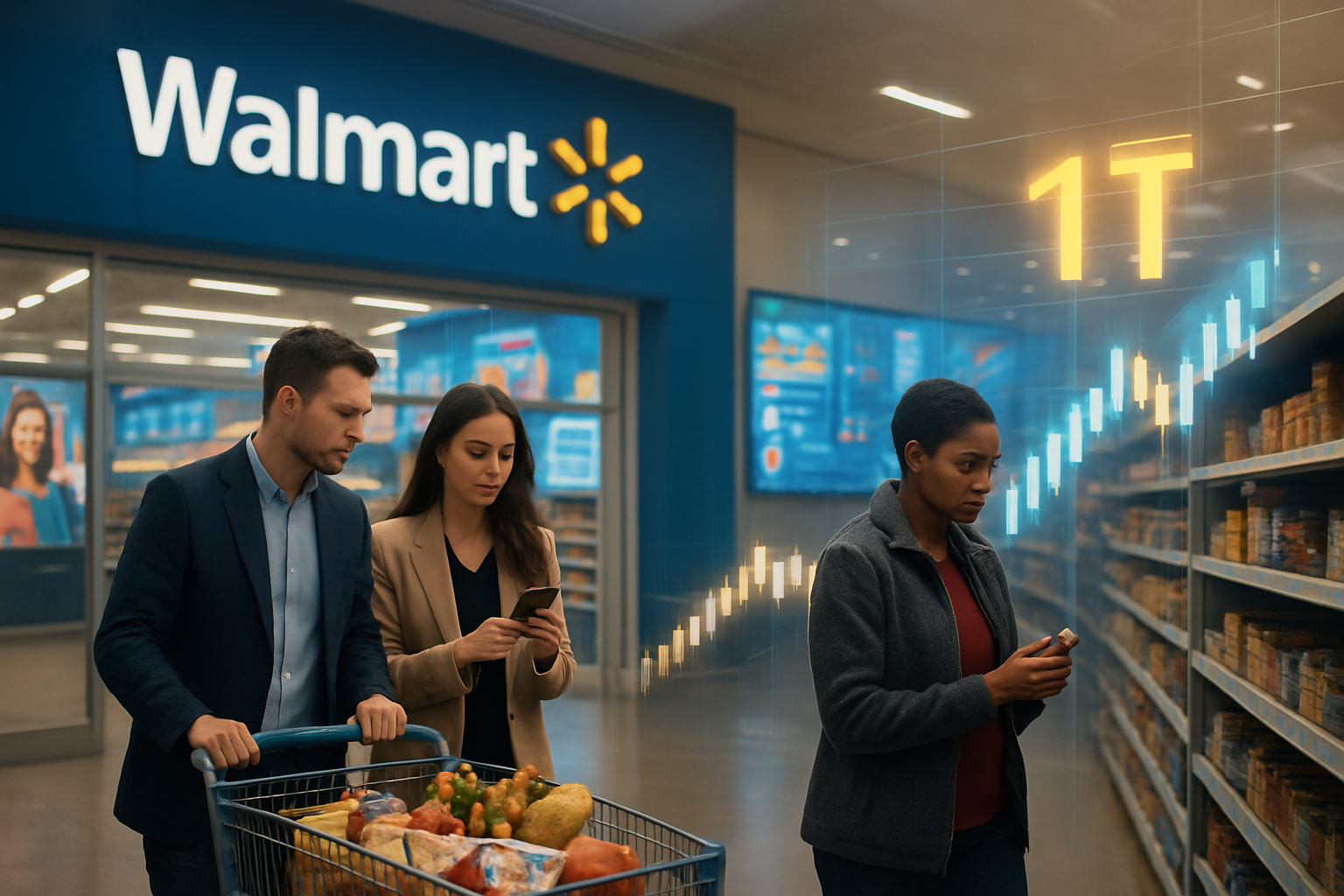
The fiscal fourth quarter ending January 2026 was a study in contrasts for the world’s largest retailer. Walmart reported adjusted earnings per share (EPS) of $0.74, edging past the analyst consensus of $0.73. This performance was anchored by the company’s ability to attract households earning over $100,000 annually, a demographic that has increasingly turned to Walmart for both value and the convenience of its Walmart+ delivery services. However, during the earnings call, new CEO John Furner—who officially took the helm from Doug McMillon on February 1, 2026—detailed a concerning trend among lower-income shoppers. Furner noted that these households are increasingly managing budgets "paycheck to paycheck," frequently opting for smaller pack sizes and private-label brands to stretch their dollars toward the end of each month.
The timeline leading to this report has been marked by a significant strategic pivot. Two years ago, in February 2024, Walmart announced its $2.3 billion acquisition of Vizio, a move designed to bolster its retail media arm, Walmart Connect. By early 2026, this integration has matured, with advertising and membership fees now accounting for nearly one-third of the company's total operating income. This shift toward a high-margin business model, reminiscent of the strategy pioneered by Amazon.com Inc. (NASDAQ: AMZN), has allowed Walmart to offset some of the thin margins found in its traditional grocery business. However, the persistent "stress behaviors" observed in the low-end consumer segment have prevented management from issuing a more aggressive forecast for the year ahead.
Identifying the Winners and Losers in a Volatile Retail Landscape
As Walmart consolidates its lead, the "winners" in this environment appear to be those retailers capable of offering extreme value or high-tech convenience. Walmart itself remains a winner, particularly as it steals market share from traditional grocers and mid-tier retailers like Target Corp. (NYSE: TGT). Target has struggled to maintain its "discretionary" spending momentum as shoppers prioritize essentials over home decor and apparel. Walmart’s massive scale and digital integration have created a defensive moat that mid-sized competitors are finding difficult to breach.
Conversely, the "losers" in this report are the discount retailers serving the most vulnerable demographics. Dollar General Corp. (NYSE: DG) and Dollar Tree Inc. (NASDAQ: DLTR) face a dual threat: they are grappling with the same "stretched" consumer base Walmart described, but without the high-income "trade-down" shoppers that have buoyed Walmart's balance sheet. Furthermore, as Walmart expands its fresh produce and e-commerce offerings, it is directly encroaching on the territory once held exclusively by rural dollar stores. For investors, the takeaway is clear: the divide between the "haves" and "have-nots" in the retail sector is widening, and scale has become the ultimate competitive advantage.
Wider Significance: The Retail Media Revolution and Macroeconomic Red Flags
Walmart’s recent performance fits into a broader industry trend where retail is no longer just about selling products; it is about monetizing data and eyeballs. The successful integration of Vizio’s SmartCast operating system into the Walmart Connect ecosystem represents a paradigm shift for brick-and-mortar giants. By transforming its stores and digital platforms into a massive advertising network, Walmart is successfully diversifying its revenue streams. This evolution is critical as traditional retail margins remain under pressure from potential tariff impacts and food inflation, which management cited as persistent headwinds during the earnings call.
The report also serves as a bellwether for the broader U.S. economy. When the nation’s largest private employer warns that its core customer is struggling, it often precedes a wider cooling in consumer spending. Historical precedents, such as the retail shifts seen in 2008 and 2015, suggest that Walmart’s conservative guidance often mirrors the Federal Reserve’s own concerns regarding labor market softening. The company’s focus on "Sparky," its new generative AI shopping assistant, indicates that the next phase of competition will be won by those who can lower the cost of service through automation while maintaining a high-value proposition for the price-sensitive consumer.
Looking Ahead: The Furner Era and Strategic Pivots
Looking toward the short and long term, the primary focus will be on John Furner’s leadership and his ability to navigate a potentially turbulent 2027 fiscal year. Strategic pivots toward automation and AI-driven supply chain management are expected to be front and center. Walmart is likely to continue its aggressive rollout of "Market Fulfillment Centers"—small, automated warehouses located within existing stores—to further decrease delivery times and compete with the logistics prowess of Amazon.
However, challenges remain. The potential for a "hard landing" in the economy could further suppress the spending power of the lower-income cohort, which still makes up the bulk of Walmart’s transaction volume. Investors should watch for whether the high-income shoppers who "traded down" to Walmart during the inflationary peak of 2024-2025 will remain loyal once the economic climate stabilizes, or if they will return to more premium retailers. The company’s ability to retain this demographic through Walmart+ and its improved store experience will be the deciding factor in its long-term growth trajectory.
A Final Assessment of the Retail Giant
In summary, Walmart's Q4 report paints a picture of a company in a position of strength, yet acutely aware of the fragility surrounding it. The "beat" on revenue and earnings proves that the company’s "Value-Plus" strategy—combining low prices with high-end convenience—is working. Yet, the caution expressed by management serves as a sobering reminder that the "K-shaped" recovery of the mid-2020s has left a significant portion of the population behind. The transition from Doug McMillon to John Furner marks a new chapter focused on technology and high-margin services, but the health of the U.S. consumer remains the ultimate variable.
As we move forward into 2026, investors should keep a close eye on comparable store sales and the growth of the advertising business. While the $1 trillion market cap milestone reached earlier this year was a historic achievement, the real test will be how Walmart manages the "unpredictability" it highlighted in its guidance. For now, Walmart remains the definitive leader of the retail pack, but its path forward is paved with the reality of an increasingly divided American shopper.
This content is intended for informational purposes only and is not financial advice