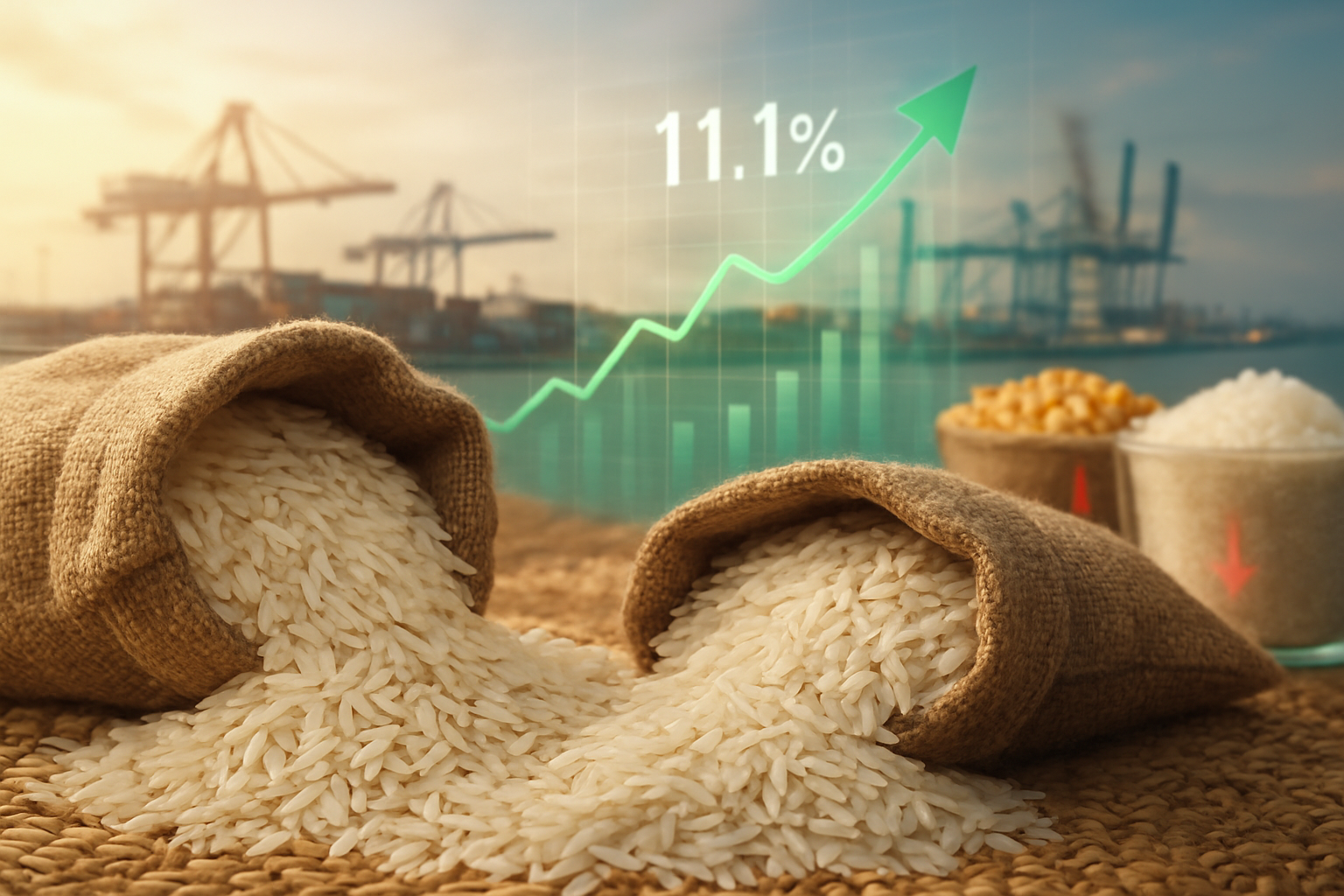
In a striking divergence from the broader agricultural sector, global rice prices have surged by 11.1% as of mid-February 2026. This sharp rally comes at a time when other staple commodities, such as corn and sugar, are seeing their valuations erode under the weight of oversupply. The sudden spike in rice—the primary caloric source for more than half the world’s population—has sent ripples through global trade hubs, signaling a complex shift in food security dynamics and export policies.
The immediate implications are twofold: a windfall for major Asian exporters and a mounting headache for global food processors grappling with renewed margin pressure. While the "Big Three" grains—wheat, corn, and soy—have largely stabilized or declined over the past year, rice has entered a "decoupling" phase, driven by a perfect storm of policy reversals in India, seasonal demand spikes in Southeast Asia, and localized supply crises in major consuming nations like Japan.
The Thaw: How Policy Shifts Ignited the Rally
The current 11.1% surge is the culmination of a "catch-up" demand phase that began in late 2025. For nearly two years, the global rice market was stifled by aggressive export restrictions from India, the world’s largest supplier. When the Indian government finally lifted the last of its curbs on non-basmati white rice in late 2025, market analysts expected a price collapse due to the sudden influx of supply. Instead, the opposite occurred. Traditional importers across Africa and the Middle East, who had been operating on razor-thin inventories, rushed to the market simultaneously to secure volumes, creating a massive demand bottleneck that pushed prices upward.
Throughout January and early February 2026, this "thawing" of the market was further exacerbated by seasonal pressures. The convergence of preparations for Ramadan and the Lunar New Year saw a spike in demand for premium fragrant and aromatic varieties. While India reached a record production of 152 million metric tons in the 2025/26 season, the sheer volume of "buy" orders from nations like Nigeria, Senegal, and the Philippines outpaced the logistics of shipping the grain.
The situation was further complicated by a domestic crisis in Japan, where retail rice prices nearly doubled. Despite high production levels, a combination of delayed government stockpile releases and rigid pricing policies by agricultural cooperatives led to widespread hoarding. By the time the Japanese Agriculture Minister resigned in February 2026, the psychological impact had already contributed to a bullish sentiment across the global trading floor, as investors bet on continued supply-side fragility in key markets.
Winners and Losers: The Corporate Impact
The primary beneficiaries of this price surge are the massive rice milling and export houses in South Asia. KRBL Limited (NSE:KRBL) and LT Foods Limited (NSE:DAAWAT) have seen a significant uptick in their export margins as they capitalize on both high volumes and elevated global prices. As India reclaims its 40% share of the global rice trade, these companies are leveraging their massive processing infrastructure to meet the surge in international orders. Similarly, Olam Group Limited (SGX:O32), a titan in the agricultural trading space, has benefited from its diversified sourcing network, allowing it to navigate the logistics of the Indian export boom better than smaller competitors.
Conversely, global food and beverage giants are beginning to feel the heat. The Kraft Heinz Company (NASDAQ: KHC) and Nestlé S.A. (SWX:NESN) have both issued cautious outlooks for the first half of 2026. For these companies, rice is a critical raw material for everything from baby food to frozen meals. The 11.1% rise in rice prices, combined with persistent shipping costs, threatens to compress margins that were just beginning to recover from the inflation shocks of 2023-2024. Analysts suggest that if prices remain at these levels through the second quarter, consumers should expect a "price reset" on supermarket shelves for rice-based products.
Agricultural giants like Archer-Daniels-Midland Company (NYSE: ADM) and Bunge Global SA (NYSE: BG) find themselves in a nuanced position. While their rice trading desks are likely profitable, their heavy exposure to corn and sugar—both of which have seen price declines of 2.7% and 2.1% respectively—means the rice rally may only serve as a partial hedge against broader weakness in their grain portfolios.
A Growing Divide in Agricultural Commodities
The decoupling of rice from corn and sugar highlights a significant shift in the agricultural landscape. Typically, these commodities move in loose correlation as they compete for acreage and are influenced by similar macro factors like fuel costs and fertilizer prices. However, in 2026, the "green revolution" in corn production—fueled by record yields in the U.S. and Brazil—has created a glut that rice has avoided. Unlike corn, which is heavily utilized for animal feed and ethanol, rice remains almost exclusively a human food crop, making its demand far less elastic and more sensitive to population growth and cultural milestones.
This event also marks a turning point in food security policy. The 11.1% gain is being closely watched by the United Nations' Food and Agriculture Organization (FAO), as it represents a "cost-of-living" tax on the world’s most vulnerable populations. Historically, when rice prices spike independently of other grains, it often leads to a "quality-substitution" effect where lower-income consumers switch from premium fragrant rice to broken rice or cheaper tubers. We are already seeing this trend emerge in Southeast Asian markets, where Vietnam has strategically pivoted its exports toward "quality over quantity," focusing on high-value, low-emission rice to capture premium markets in the EU.
The Path Forward: Stability or Continued Volatility?
In the short term, the market is looking for signs of stabilization as the initial wave of Indian exports reaches its destination ports. If the "catch-up" demand from African nations is satisfied by March 2026, we may see a slight softening of prices. However, the long-term outlook remains bullish due to structural changes in production. Climate volatility remains a "wild card," with the tail end of the recent El Niño cycle still impacting yields in certain parts of Thailand and the Mississippi Delta in the United States.
Market participants should also watch for strategic pivots from major importers. Nations like Indonesia and China are increasingly looking to diversify their sourcing away from the "Big Three" (India, Thailand, Vietnam) toward emerging producers in South America and Africa. This diversification could lead to new market opportunities for agribusinesses willing to invest in the infrastructure of these developing regions. For investors, the challenge will be identifying which companies can maintain their margins if this 11.1% gain becomes the "new normal" for the remainder of the year.
Market Wrap-Up: A New Chapter for Grains
The 11.1% surge in rice prices is a stark reminder that the global commodity market is rarely a monolith. While corn and sugar investors may be mourning a period of oversupply and stagnant prices, the rice market has demonstrated remarkable resilience and growth. The primary takeaways for the market are the overwhelming influence of Indian export policy on global benchmarks and the persistent strength of consumer demand in emerging economies.
Moving forward, the market will likely remain in a state of "high-plateau" pricing. Investors should keep a close eye on upcoming crop reports from Thailand and Vietnam, as any further production shortfalls could send prices even higher. In the coming months, the focus will shift from "supply availability" to "affordability," as the world watches to see if the 11.1% gain can be sustained or if the weight of high prices will eventually trigger a demand contraction.
This content is intended for informational purposes only and is not financial advice.