As the first month of 2026 draws to a close, Apple Inc. (Nasdaq: AAPL) finds itself at a historic crossroads. No longer merely a boutique hardware designer, the Cupertino giant is undergoing its most radical structural transformation since the launch of the original iPhone. By consolidating its leadership around an "engineering-first" philosophy and forging a landmark alliance with Google (Nasdaq: GOOGL), Apple is signaling that its future will be defined by pervasive artificial intelligence and a disruptive push into the living room and gaming markets.
The immediate implications are profound for both the company’s $3.65 trillion market valuation and the broader tech sector. The recent integration of "Siri 2.0"—powered by a hybrid of Apple’s proprietary on-device models and Google’s Gemini 3—has silenced critics who once viewed Apple as an AI laggard. However, this shift has also placed Apple in the crosshairs of global regulators, who are increasingly wary of the "gatekeeper" status the company holds over the next generation of digital agents.
The Reorganization: A New Guard for the AI Era
The architectural shift within Apple’s executive suite has been brewing for eighteen months, culminating in the late 2025 appointment of John Ternus, Senior Vice President of Hardware Engineering, as the "executive sponsor" for all product design. This move, following the retirement of long-time Chief Operating Officer Jeff Williams, effectively crowns Ternus as the likely successor to CEO Tim Cook. Ternus represents a shift away from the aesthetic-obsessed era of Jony Ive toward a pragmatic, engineering-focused leadership style that prioritizes rapid AI deployment over design purity.
Parallel to the hardware reshuffle, Apple’s AI leadership has seen its own seismic change. With the impending retirement of AI chief John Giannandrea in early 2026, Apple has installed Amar Subramanya—a veteran of both Google and Microsoft (Nasdaq: MSFT)—to lead the charge. Reporting directly to Craig Federighi, Subramanya is tasked with executing the "Campos" project, the internal codename for the massive iOS 26.4 update that brings agentic AI to every facet of the Apple ecosystem. This new structure aims to break down the silos between hardware and software, ensuring that the upcoming M5 and A19 chips are purpose-built for the low-latency, private AI inference that Apple believes will be its ultimate competitive edge.
Industry reaction has been cautiously optimistic. While the stock saw significant volatility in mid-2025 due to stagnant iPhone sales in China, the 50% recovery in late 2025 suggests that Wall Street has bought into the "Apple Intelligence" vision. Analysts point to the success of the ultra-thin "iPhone Air" and the steady adoption of Apple’s Private Cloud Compute (PCC) as evidence that the company can monetize AI privacy in a way its competitors cannot.
The Competitive Fallout: Winners and Losers in the New Hierarchy
The pivot to AI and entertainment is creating a new hierarchy of winners and losers. Google has emerged as a surprising "frenemy" winner, securing an estimated $1 billion annual windfall for providing the cloud-based backbone of Siri’s generative capabilities. Yet, this is a double-edged sword; while it bolsters Google’s bottom line, it also risks making its own Pixel hardware less distinctive. Conversely, Nvidia (Nasdaq: NVDA), which flourished during the AI training boom, faces a shifting landscape as Apple successfully moves AI inference—the actual running of AI models—to its own silicon, reducing the long-term dependency of the consumer market on high-end Nvidia data center chips.
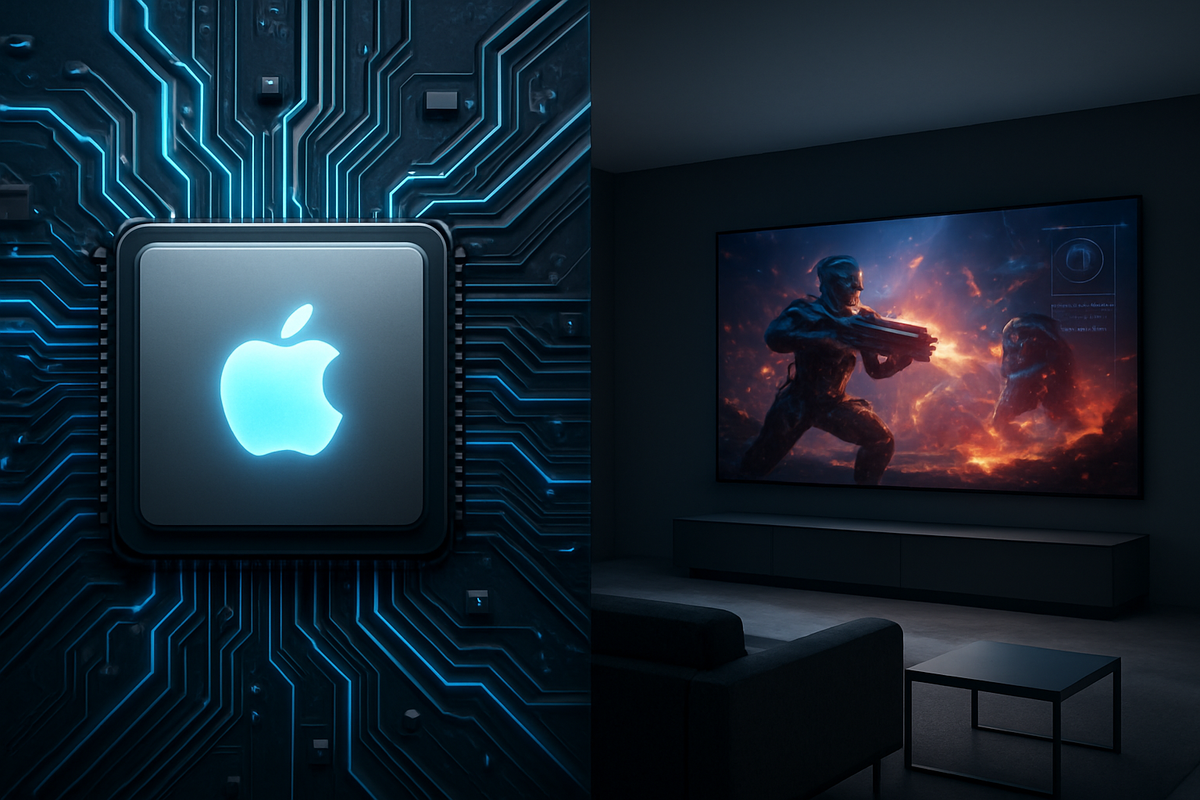
In the entertainment sector, the losers are becoming more visible. Sony Group Corp. (NYSE: SONY) and Microsoft’s gaming division are facing an unexpected assault from the 2026 Apple TV 4K. Positioned as a "console killer" for under $200, the new device utilizes the A19 chip’s ray-tracing capabilities to bring AAA gaming to the masses. With reports that the PlayStation 6 and next-generation Xbox are facing delays due to soaring component costs, Apple is capitalizing on a "generation gap" to lure casual gamers into its ecosystem. Meanwhile, Meta Platforms (Nasdaq: META) finds its hardware ambitions challenged by Apple’s rumored "AI Pin," an ultra-portable wearable that competes directly with Meta’s Ray-Ban smart glasses for the title of the definitive personal AI assistant.
Edge AI and the Regulatory Battlefront
Apple’s strategy fits into a broader industry trend of "Edge AI," where processing occurs on the user’s device rather than in distant data centers. This move is as much about technology as it is about politics. By keeping data local, Apple aims to bypass the growing public anxiety over AI surveillance—a strategy that serves as a powerful marketing tool against the cloud-centric models of Microsoft and Amazon (Nasdaq: AMZN). However, this "walled garden" approach is inviting intense scrutiny.
The U.S. Department of Justice and the European Union are already investigating whether the Apple-Google AI partnership is a way to circumvent previous antitrust rulings. Regulators are weighing "Choice Screen" mandates that would force Apple to allow users to select their default AI engine—much like the browser choice screens of the past. If enforced, this could strip Apple of its ability to control the user experience, potentially forcing it to integrate rivals like OpenAI’s ChatGPT or Anthropic’s Claude at a foundational level. Historical precedents, such as the Microsoft antitrust case of the late 90s, suggest that these legal battles could drag on for years, creating a persistent "regulatory overhang" for investors.
The Road Ahead: From Mobile to Robotics
Short-term, the market is bracing for the January 29, 2026, fiscal earnings report. Most analysts expect record revenue driven by the iPhone 17 cycle, but the true metric of success will be the growth of "Apple Intelligence Pro," the newly launched subscription tier for advanced AI features. This represents Apple’s first major attempt to turn AI into a direct recurring revenue stream, a move that will be closely watched by every SaaS provider in the industry.
Long-term, the strategic pivot points toward the home and the body. Beyond the iPhone, the "HomePad" smart hub and the secretive J595 desktop robot represent Apple’s ambition to move from personal computing to ambient computing. The Vision Pro (Nasdaq: AAPL), now in its third iteration, is also expected to transition from a niche productivity tool to a primary entertainment hub, especially as more sports leagues sign exclusive spatial broadcasting deals following the success of the MLS and MLB partnerships.
Investor Takeaway: A High-Stakes Evolution
The structural shifts at Apple in early 2026 mark the end of the post-Steve Jobs "polishing" era and the beginning of a more aggressive, engineering-led chapter. For investors, the takeaway is clear: Apple is no longer a safe-haven hardware stock but a high-growth AI and services play. The company’s ability to successfully integrate external AI models while maintaining its reputation for privacy will be the ultimate test of the Ternus-Subramanya leadership era.
In the coming months, investors should watch for two key indicators: the adoption rate of "Apple Intelligence Pro" and the outcome of the DOJ’s probe into the Gemini deal. If Apple can maintain its grip on the "Personal Agent" market while warding off regulatory fragmentation, its path toward a $4 trillion market cap seems inevitable. However, the pressure to innovate in a field moving as fast as AI leaves little room for error. The Apple of 2026 is faster and more technologically integrated than ever, but it is also operating in a world where its hardware dominance is no longer a guaranteed shield against the disruptive power of software.
This content is intended for informational purposes only and is not financial advice.