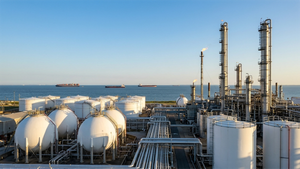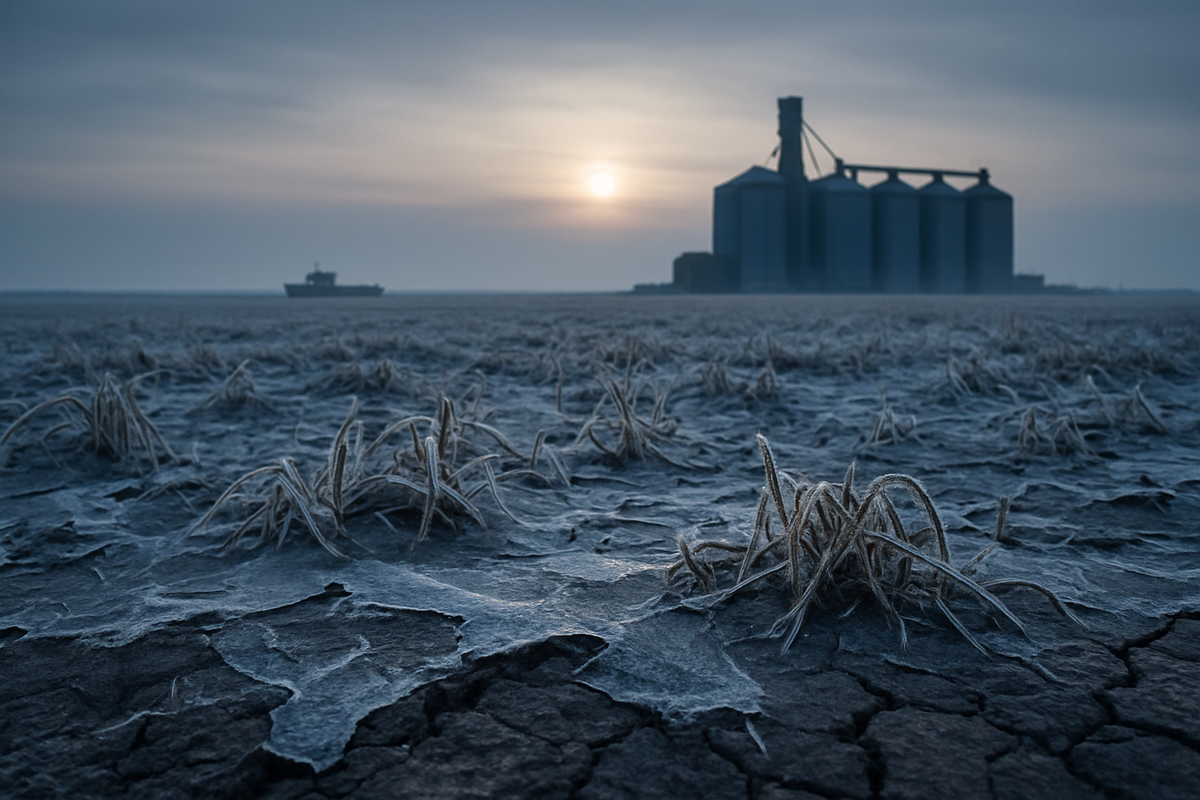
As of January 15, 2026, the global agricultural landscape is grappling with a paradox of plenty and peril. While the 2025/26 marketing year has seen record-level production in Russia, a severe meteorological crisis in the nation's southern breadbasket is now threatening the upcoming 2026 harvest. A brutal cold snap, with temperatures plummeting to -15°C in key regions like Rostov, has introduced a significant "winter kill" risk premium into international markets, just as global supply chains were beginning to stabilize.
The immediate implications are a volatile "tug-of-war" in wheat futures. In Chicago and Paris, prices saw a sharp 4% rally in early January as traders reacted to the frost, only to be partially tempered by a bearish United States Department of Agriculture (USDA) report on January 12, which raised global stock estimates. For the public, this volatility signals continued uncertainty in food inflation, while for the markets, it underscores Russia's outsized role as the world's primary price setter for wheat.
A Season of Extremes: From Siberian Surpluses to Southern Freezes
The current crisis is the culmination of a highly erratic 2025/26 growing cycle. The season began with a devastating drought in Southern Russia during the spring and summer of 2025, which many feared would cripple the national harvest. However, in a surprising turn of events, record-breaking yields in Siberia and the Ural Mountains—fueled by unseasonably favorable moisture—more than offset those losses. This led the USDA and local agencies like IKAR to revise the 2025/26 Russian production upward to approximately 89.5 million metric tons (MMT).
However, the outlook for the 2026/27 crop, currently in the ground, has turned bleak. According to SovEcon, the autumn 2025 sowing period was plagued by a persistent lack of soil moisture, leaving roughly 37% of winter grains in "poor condition" before they even entered dormancy. The situation worsened in early January 2026 when an unseasonably warm December gave way to a sudden, deep freeze. Without a sufficient snow cover to act as insulation, the vulnerable winter wheat crop is now facing its highest risk of winterkill in recent years. Furthermore, rapid temperature shifts have caused "ice crusting" in the Central and Volga regions, a phenomenon that effectively suffocates the plants beneath.
In response to these developments, the Russian government has significantly increased its grain export quota for the February 15 to June 30, 2026, period to 20 million metric tons—nearly double the quota of the previous year. This move appears designed to clear out the massive 2025 surplus while prices remain somewhat elevated, providing Russian farmers with much-needed cash flow as they face rising input costs and shrinking profit margins for the next season.
Winners and Losers: Corporate Giants Navigating the Grain Storm
The volatility in the Black Sea region is creating a divergent set of outcomes for the world's leading agribusinesses. Bunge Global SA (NYSE: BG) has emerged as a clear market leader in early 2026. Shares of Bunge recently touched a 52-week high of $106.05, as investors cheered the successful integration of Viterra. This merger has transformed Bunge into a logistical titan, allowing it to bypass regional bottlenecks more efficiently than its competitors. Analysts at Morgan Stanley suggest that Bunge’s expanded footprint in alternative export hubs gives it a distinct advantage as Russian supply becomes more unpredictable.
In contrast, Archer-Daniels-Midland (NYSE: ADM) has faced a more complex start to the year. While ADM remains a "Dividend King" with over 50 years of payout increases, the company has been pressured by fluctuating "crush margins"—the profit earned from processing oilseeds. Despite a stock pullback in late 2025, ADM is currently executing an aggressive share repurchase program. The company is leaning heavily on its Nutrition segment and a $750 million cost-cutting initiative to offset the halved profits its Ag Services unit experienced during the height of 2025's trade chaos.
On the input side, Nutrien (NYSE: NTR) and The Mosaic Company (NYSE: MOS) are seeing renewed interest. Nutrien was upgraded to "Overweight" by Morgan Stanley on January 14, 2026, as logistical hurdles in Russia and Belarus continue to keep global potash supplies tight. As Russian farmers struggle with tighter budgets and reduced spending on high-quality fertilizers, the global market for Nutrien’s Canadian-mined potash has strengthened. Meanwhile, Corteva (NYSE: CTVA) is benefiting from a strategic shift on the ground; Russian and Eastern European farmers are increasingly pivoting away from wheat toward more profitable oilseeds like sunflowers and rapeseed. Corteva reported a 13% rise in net sales in its latest update, largely driven by high demand for its advanced oilseed and corn products in the EMEA region.
Broader Significance: Food Security and the Pivot to Oilseeds
The ongoing weather risks in Russia are not occurring in a vacuum; they represent a significant shift in the global food security narrative. For years, Russia has been the low-cost supplier of choice for major importers like Egypt and Saudi Arabia. However, the combination of "winter kill" threats and a shrinking wheat acreage—as farmers favor sunflowers and rapeseed—suggests that the era of ultra-cheap Russian wheat may be entering a period of structural decline. This fits into a broader industry trend where climate volatility is forcing regional specialization and a move toward more resilient, high-margin crops.
The regulatory implications are also substantial. The Russian government's floating export tax continues to squeeze domestic farmer margins, potentially leading to a long-term reduction in the use of high-quality seeds and technology. This creates a "quality gap" that could benefit North American and European producers who are better equipped to maintain yield standards under environmental stress. Historically, periods of significant winterkill in the Black Sea (such as in 2010 and 2012) have led to multi-year rallies in global grain prices, and 2026 is showing early signs of following that precedent.
The Road Ahead: Scenarios for the 2026 Harvest
As we look toward the spring of 2026, the market will be laser-focused on the "thaw." If the ice crusting and deep freezes of January translate into widespread acreage abandonment, we could see a massive supply shock by mid-year. Conversely, if late-winter precipitation is favorable and the spring is mild, some of the damaged crops may recover, though yield potential has already been fundamentally capped.
In the short term, the "tug-of-war" between record 2025 stocks and 2026 production risks will keep wheat prices in a volatile range. Strategic pivots are already underway, with major grain traders shifting their focus toward South American soy and corn to balance their portfolios. For investors, the emergence of a "weather premium" means that any further negative meteorological reports from the Russian breadbasket could trigger a rapid breakout in CBOT futures, which are currently hovering near $5.09 per bushel.
Conclusion: A Market on Edge
The situation in Russia as of January 2026 serves as a stark reminder of the fragility of the global agricultural supply chain. The key takeaway for investors is that while current stockpiles appear healthy on paper, the health of the 2026 harvest is on a knife's edge. The market is moving into a phase where logistical agility—exemplified by companies like Bunge Global SA (NYSE: BG)—and specialized input providers like Corteva (NYSE: CTVA) will likely outperform generalists.
Moving forward, the market will be dictated by the export flows during the February-to-June window and the condition of the winter crop as it emerges from dormancy in April. Investors should closely monitor the Weekly Crop Progress reports and Russian export quota utilization. While the 2025 harvest provided a temporary buffer, the "Frozen Harvest" of 2026 may define the next cycle of global food prices.
This content is intended for informational purposes only and is not financial advice.