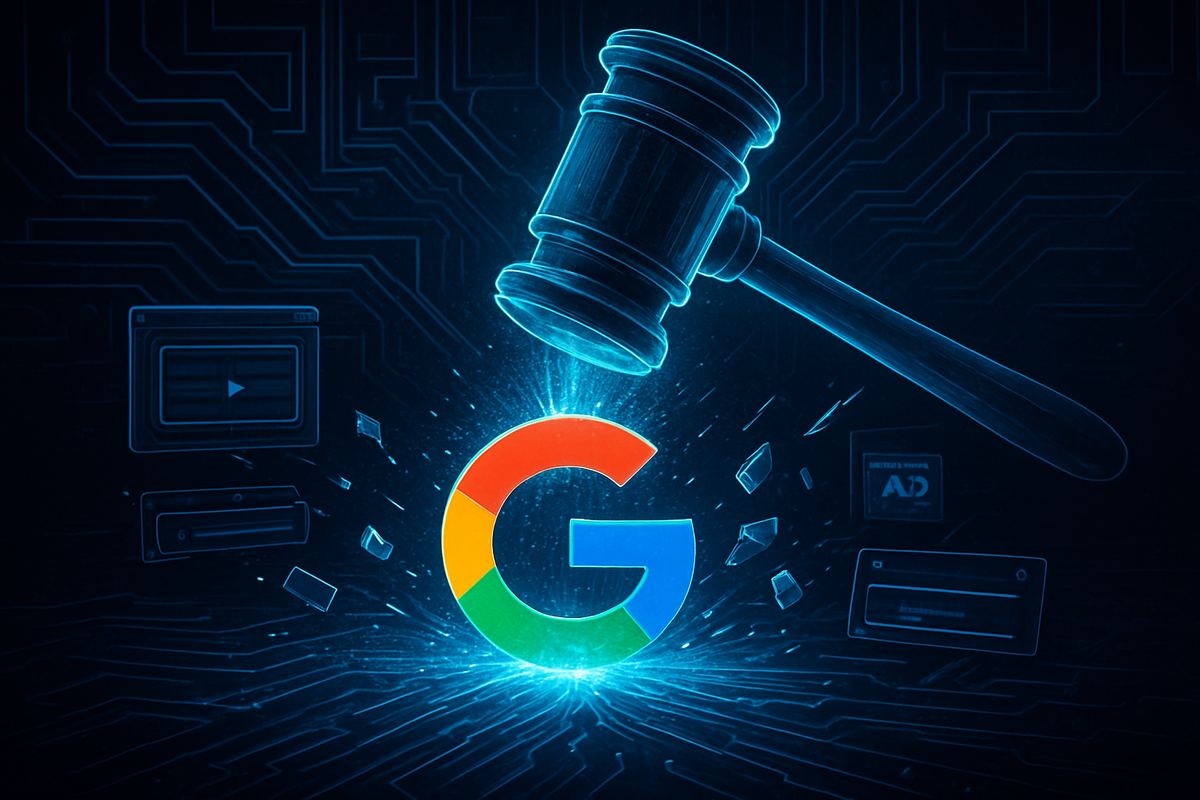
As the calendar turns to 2026, Alphabet Inc. (NASDAQ: GOOGL) finds itself at a historic crossroads. After decades of undisputed dominance in the digital landscape, the search giant is entering a "year of reckoning" that will redefine its corporate structure and the very mechanics of how the world accesses information. While the company successfully navigated the initial existential threat of a Search business breakup in late 2025, it now faces a dual-front war: the implementation of sweeping behavioral mandates in search and a looming structural divestiture of its massive advertising technology arm.
The implications for the broader market are profound. For investors, the "regulatory discount" that has long weighed on Alphabet’s valuation is being replaced by a complex "execution risk" as the company pivots to an AI-first model while simultaneously dismantling the exclusive defaults that built its empire. For the public, 2026 marks the first year that "choice screens" will become a standard feature on new devices in the United States, potentially ending the era of Google as the invisible, automatic gateway to the internet.
The Search for a New Normal
The road to this critical juncture began in earnest in August 2024, when U.S. District Judge Amit Mehta issued a landmark ruling declaring Google a monopolist in the general search market. Throughout 2025, the legal battle shifted to the "remedy phase," where the Department of Justice (DOJ) initially pushed for a full breakup of the company, including the forced sale of the Chrome browser and the Android operating system. However, in a significant strategic pivot in September 2025, Judge Mehta opted for a "behavioral regime" rather than a structural one, a decision that sent Alphabet’s stock to record highs near $314 per share.
Despite avoiding a search breakup, the mandates taking effect in 2026 are far from toothless. Alphabet is now legally barred from entering into exclusive default search agreements—most notably its multi-billion dollar annual payment to Apple Inc. (NASDAQ: AAPL) to remain the default engine on Safari. Additionally, the court has ordered Google to share its vast search index and user-interaction data with "Qualified Competitors," a move intended to lower the barrier for rival search engines and AI startups.
Simultaneously, a second major antitrust front has reached a boiling point. In April 2025, Judge Leonie Brinkema ruled that Google held an illegal monopoly over the digital advertising technology stack. Unlike the search case, legal experts and industry insiders expect a final decision in early-to-mid 2026 that will likely mandate the structural divestiture of Google Ad Manager, specifically the AdX exchange and the DFP publisher server. This would represent the most significant forced breakup of a tech company since the AT&T divestiture in the 1980s.
Winners and Losers in the Post-Monopoly Era
The 2026 regulatory landscape is creating a clear set of winners and losers across the tech sector. The primary beneficiaries of the AdTech breakup are independent Supply-Side Platforms (SSPs) such as Magnite (NASDAQ: MGNI) and PubMatic (NASDAQ: PUBM). For years, these companies argued that Google’s ownership of both the publisher ad server and the ad exchange gave it a "last look" advantage that stifled competition. A forced spinoff of AdX is expected to level the playing field, potentially increasing win rates for independent platforms on high-value web inventory.
In the search space, Microsoft Corp. (NASDAQ: MSFT) stands to gain the most. With every 1% of market share Bing captures from Google translating to roughly $2 billion in annual revenue, the introduction of mandatory "choice screens" on mobile devices is a massive opportunity. Analysts project Bing’s global market share could rise toward 12% by the end of 2026, fueled by its aggressive integration of AI-powered Copilot features. Privacy-focused competitors like DuckDuckGo are also positioned to see a surge, with some forecasts suggesting their U.S. market share could triple as users are presented with clear alternatives during device setup.
Conversely, Apple Inc. (NASDAQ: AAPL) faces a significant revenue headwind. The loss of the "Google Default" payment—estimated to be as high as $20 billion annually—represents a pure-profit hole in Apple’s Services division. While Apple may attempt to launch its own search engine or strike a non-exclusive deal with a provider like Microsoft, the immediate financial impact of the court’s ban on exclusive defaults is a rare negative for the iPhone maker.
A Global Shift in Antitrust Philosophy
The events of 2026 represent a fundamental shift in antitrust philosophy, moving away from the "consumer welfare" standard that focused solely on price and toward a "structuralist" approach that prioritizes market health and data access. This aligns with global trends, particularly the European Union’s Digital Markets Act (DMA), which is expected to result in multi-billion euro fines for Alphabet in 2026 as regulators crack down on how Google displays its own services, like Flights and Hotels, in search results.
This regulatory pressure is coinciding with a technological sea change: the rise of generative AI. According to research from Gartner, traditional search volume is projected to drop by 25% by 2026 as users shift toward "answer engines" like Perplexity AI and OpenAI’s SearchGPT. The DOJ’s mandate for Google to share its search data is specifically designed to help these AI-native competitors build more accurate models, effectively using Alphabet’s own data to accelerate the decline of its core product.
Historically, this mirrors the 2001 Microsoft antitrust settlement. While Microsoft was not broken up, the years of regulatory scrutiny and the ban on certain bundling practices allowed a new generation of web-based companies—including Google itself—to flourish. In 2026, we are seeing the same cycle repeat, as the shackles placed on Alphabet create the oxygen necessary for the AI-driven "post-search" era to take hold.
Strategic Pivots and Future Scenarios
Looking ahead, Alphabet’s survival and growth will depend on its ability to execute a high-stakes strategic pivot. The company is already moving toward an "AI-first" search experience through its Gemini model, attempting to provide direct answers that keep users within its ecosystem even as it loses its default status on third-party devices. Short-term, the market will be watching the "choice screen" rollout closely; if Google’s brand loyalty remains high, the loss of default status may be less damaging than feared.
Long-term, the potential divestiture of its AdTech business could actually unlock value for shareholders. Some analysts argue that a standalone Google Ad Manager could be valued more highly by the market without the "regulatory discount" of being part of Alphabet, while a leaner Alphabet could focus more intensely on Cloud and AI. However, the risk of a "death by a thousand cuts" remains, as multiple international jurisdictions—including Australia and the UK—are expected to follow the U.S. lead with their own restrictive measures in late 2026 and 2027.
The Investor’s Watchlist
As 2026 unfolds, the narrative surrounding Alphabet is shifting from one of legal peril to one of competitive adaptation. The key takeaway for investors is that while the threat of a total corporate dissolution has receded, the era of "easy growth" through exclusive defaults and vertical ad-stack dominance is over. The market moving forward will be defined by "choice," both as a legal requirement and a technological reality driven by AI.
Alphabet remains a formidable powerhouse with a massive cash pile and industry-leading AI capabilities, but its path to 2027 will be paved with litigation, structural reorganization, and a desperate race to redefine search before its rivals do. Investors should watch for the Q2 2026 AdTech ruling and the initial data from U.S. choice screen rollouts as the primary indicators of whether Alphabet can maintain its crown in a more fractured, competitive digital world.
This content is intended for informational purposes only and is not financial advice.