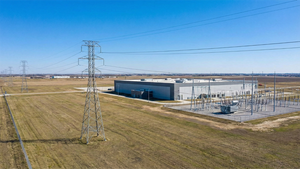
In a significant development set to reshape the landscape of U.S. capital markets, the Texas Stock Exchange (TXSE) Group has successfully concluded its fundraising efforts, amassing a formidable $270 million in capital. The latest injection of approximately $20 million, finalized around December 15, 2025, was spearheaded by financial titans Goldman Sachs Group Inc. (NYSE: GS) and Bank of America Corp. (NYSE: BAC). This substantial backing positions the TXSE as a credible and well-funded challenger to the long-standing duopoly of the New York Stock Exchange (NYSE) and Nasdaq, signaling a new era of competition for corporate listings and trading.
The immediate implications of this robust funding round are profound. With a diverse roster of 86 equity investors, including some of the most influential names in global finance, the TXSE Group is now in a strong financial position to pursue its ambitious goal of launching trading operations in early 2026. This move is expected to introduce a fresh dynamic to the market, offering companies an alternative listing venue and potentially fostering innovation and more favorable conditions for issuers and investors alike.
A New Contender Emerges: Detailing the TXSE's Ascent
The journey to $270 million in capital has been a strategic and well-executed one for the Texas Stock Exchange. The initial fundraising efforts saw the TXSE Group secure $120 million in June 2024, laying the groundwork for its future ambitions. This was followed by a more substantial second funding round by October 31, 2025, which brought the total capital raised to over $250 million and notably included an equity investment from JPMorgan Chase & Co. (NYSE: JPM). The culmination of these efforts, with the latest $20 million round led by Goldman Sachs Group Inc. (NYSE: GS) and Bank of America Corp. (NYSE: BAC) around December 15, 2025, cements the exchange's financial stability and readiness for launch.
The timeline of these investments underscores a deliberate and escalating show of confidence from the financial industry's heavyweights. With its headquarters strategically located in Dallas, the TXSE aims to capitalize on Texas's booming economy and pro-business environment, attracting a new generation of companies seeking public capital. Key players and stakeholders involved extend beyond Goldman Sachs and Bank of America to include a broad coalition of institutional investors such as BlackRock (NYSE: BLK), Charles Schwab (NYSE: SCHW), and Citadel Securities, among others. This diverse backing provides not only capital but also significant industry validation for the new exchange's model and mission.
Initial market reactions have been largely positive, viewing the TXSE's successful fundraising and recent approval from the U.S. Securities and Exchange Commission (SEC) as a crucial step towards enhancing competition in the U.S. capital markets. The strong capital base enables the TXSE to invest in cutting-edge technology, attract top talent, and develop listing standards designed to be more flexible and potentially lower cost for issuers compared to existing exchanges. This competitive pressure is anticipated to benefit companies seeking to go public by offering them more choices and potentially reducing the regulatory and administrative burdens associated with listing.
The TXSE's primary goal is clear: to revitalize competition in the U.S. equity markets, which have long been dominated by the NYSE and Nasdaq. By offering a new venue focused on greater alignment between issuers and investors, the exchange intends to become a premier listing and trading platform. It aims to achieve this by prioritizing shareholder interests, corporate governance, and expanding access to public capital markets for private companies, particularly those within Texas and the surrounding fast-growing Southeast region.
Potential Winners and Losers in the New Exchange Landscape
The emergence of the Texas Stock Exchange (TXSE) with substantial backing from major financial institutions is poised to create both winners and losers across the financial ecosystem. The most immediate potential "winners" are the companies, particularly those in Texas and the broader southern and western U.S., that are considering going public. The TXSE promises a lower-cost alternative with potentially more flexible listing standards, which could significantly reduce the barriers to entry for smaller to mid-sized companies. This could also be a boon for companies that feel underserved or overlooked by the established exchanges, providing them with a new pathway to public capital.
Furthermore, the investors who have backed the TXSE, including Goldman Sachs Group Inc. (NYSE: GS), Bank of America Corp. (NYSE: BAC), JPMorgan Chase & Co. (NYSE: JPM), BlackRock (NYSE: BLK), and Charles Schwab (NYSE: SCHW), stand to gain if the exchange successfully captures market share. Their early investment positions them to benefit from the growth and success of a new, competitive exchange. Broker-dealers and market makers who choose to support the TXSE's trading platform could also see increased transaction volumes and new revenue streams, especially if the exchange attracts a significant number of listings and trading activity.
On the other hand, the established exchanges, primarily the New York Stock Exchange (NYSE: ICE) (operated by Intercontinental Exchange Inc.) and Nasdaq (NASDAQ: NDAQ), could be considered potential "losers," at least in terms of market share. While their dominant positions are unlikely to be fully eroded overnight, the TXSE's competitive offerings could lead to a diversion of new listings and trading volumes. This increased competition might force the incumbents to re-evaluate their own listing fees, regulatory burdens, and service offerings to retain their client base, potentially impacting their profitability or growth rates.
Companies that are deeply entrenched with the existing exchanges and have built their brand around those associations might also face a strategic decision point. While many will likely remain, the allure of potentially lower costs and a fresh approach from the TXSE could prompt some to consider dual listings or even a complete shift in the long run. Additionally, service providers, legal firms, and advisory groups that primarily cater to companies listing on the NYSE or Nasdaq might need to adapt their strategies to serve potential TXSE clients, or risk losing out on new business opportunities in the evolving exchange landscape.
Wider Significance: Reshaping the Capital Markets
The launch of the Texas Stock Exchange represents a significant moment that extends beyond mere financial transactions; it reflects broader industry trends and could trigger substantial ripple effects. For decades, the U.S. equity market has operated as a de facto duopoly, with the NYSE and Nasdaq dominating listings and trading. The TXSE’s emergence challenges this status quo, aligning with a growing sentiment among issuers for more choice, lower costs, and greater flexibility in public markets. This move is indicative of a broader trend towards decentralization and regionalization in finance, where states and specific economic hubs seek to cultivate their own financial ecosystems.
The potential ripple effects on competitors and partners are manifold. For the incumbent exchanges, the TXSE’s entry could spur innovation and a re-evaluation of their existing business models, listing requirements, and fee structures. To maintain their competitive edge, the NYSE (NYSE: ICE) and Nasdaq (NASDAQ: NDAQ) may be compelled to offer more attractive terms or enhance their services, ultimately benefiting issuers. For regional financial centers, the success of the TXSE could serve as a blueprint, potentially inspiring other states or regions with strong economies to consider establishing their own exchanges, further fragmenting the market but also fostering localized capital formation.
Regulatory and policy implications are also considerable. The U.S. Securities and Exchange Commission (SEC) has already approved the TXSE, indicating a regulatory openness to new exchange models that promise to enhance competition and investor choice. However, as the TXSE grows, regulators will closely monitor its operations, listing standards, and market integrity to ensure it adheres to all necessary safeguards. There could be discussions around harmonizing listing standards across different exchanges or re-evaluating the role of regional exchanges within the broader national market system.
Historically, the U.S. has seen numerous regional stock exchanges, most of which were eventually consolidated into the larger national exchanges. However, the current environment is different, characterized by advanced technology, a highly interconnected global economy, and a strong desire among many businesses to avoid the perceived high costs and stringent regulations of the established national exchanges. The TXSE's model, backed by significant capital and prominent financial institutions, aims to learn from past attempts and leverage modern infrastructure to succeed where others have faltered, potentially marking a true renaissance for regional exchanges in the digital age.
What Comes Next: Navigating the Future of Capital Markets
The immediate future for the Texas Stock Exchange (TXSE) is centered on its planned trading launch in early 2026. This period will be crucial as the exchange works to onboard its initial set of listed companies and attract trading volume. Short-term possibilities include the rapid adoption by companies seeking a new listing venue, particularly those within Texas and the surrounding regions, which could quickly validate the TXSE's value proposition. The exchange will likely focus on demonstrating its technological capabilities, market efficiency, and the benefits of its listing standards to attract both issuers and liquidity providers.
In the long term, the TXSE aims to become a premier listing venue for exchange-traded products and corporate issues, with plans to list these later in 2026. This broader offering will be key to its sustained growth and ability to compete effectively with the established players. Potential strategic pivots or adaptations required might include fine-tuning its listing criteria based on initial feedback, expanding its technological infrastructure to handle increasing volumes, and developing unique market services that differentiate it further from the NYSE (NYSE: ICE) and Nasdaq (NASDAQ: NDAQ). The TXSE will need to continuously innovate to maintain its competitive edge and adapt to evolving market demands.
Market opportunities and challenges will emerge in tandem. A significant opportunity lies in tapping into the vast pool of private companies that are hesitant to go public due to the perceived burdens of traditional exchanges. The TXSE could become a bridge for these companies, fostering a new wave of public listings. However, challenges include overcoming the inertia of established market practices, building deep liquidity, and gaining the trust of a broad investor base. The "network effect" of existing exchanges, where liquidity attracts more liquidity, will be a formidable hurdle to overcome.
Potential scenarios and outcomes range from the TXSE becoming a niche but successful regional exchange, carving out a specific segment of the market, to it growing into a significant national player that fundamentally alters the competitive landscape. A successful TXSE could force the larger exchanges to innovate more rapidly, leading to a healthier, more competitive market for all. Conversely, if it struggles to attract sufficient listings or liquidity, it could face an uphill battle, highlighting the challenges of disrupting deeply entrenched market structures. The coming months and years will be a testament to the TXSE's strategic execution and the market's receptiveness to a new model.
Comprehensive Wrap-up: A New Chapter for U.S. Equities
The successful fundraising of $270 million by the Texas Stock Exchange (TXSE) Group, culminating in significant investments from financial powerhouses like Goldman Sachs Group Inc. (NYSE: GS) and Bank of America Corp. (NYSE: BAC) around December 15, 2025, marks a pivotal moment for U.S. capital markets. The key takeaway is the clear intent to disrupt the long-standing duopoly of the New York Stock Exchange (NYSE: ICE) and Nasdaq (NASDAQ: NDAQ), offering a fresh, competitive alternative for corporate listings and trading. This substantial backing not only validates the TXSE's vision but also provides it with the financial muscle necessary to execute its ambitious launch in early 2026.
Moving forward, the market is poised for an era of increased competition and potential innovation. The TXSE's promise of lower costs, flexible listing standards, and a focus on aligning issuer and investor interests could attract a new wave of companies to the public markets, particularly those in the rapidly growing Texas and surrounding regions. This pressure on existing exchanges could lead to a more dynamic environment, potentially benefiting all market participants through improved services and more efficient capital allocation. The diverse investor base, including many of the industry's most influential players, underscores a collective belief in the need for and viability of this new exchange.
The lasting impact of the TXSE could be profound, potentially ushering in a new chapter for U.S. equities where regional exchanges play a more prominent role, fostering localized economic growth and providing alternative pathways to public capital. Investors should closely watch several key indicators in the coming months: the initial volume and quality of listings on the TXSE, how quickly it builds liquidity, and the reactions and strategic adjustments of the incumbent exchanges. The success of the TXSE will be a testament to whether the market truly desires and can sustain a more diverse and competitive exchange landscape.
This content is intended for informational purposes only and is not financial advice