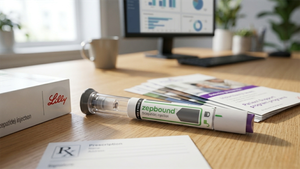
As of January 19, 2026, the pharmaceutical landscape is being redefined by a single name: Eli Lilly and Company (NYSE: LLY). Once a steady, century-old stalwart known for its dominance in the insulin market, Lilly has undergone a metamorphosis, evolving into a $1 trillion cardiometabolic powerhouse. The company’s trajectory has been propelled by a class of drugs known as GLP-1 (glucagon-like peptide-1) receptor agonists, specifically tirzepatide, marketed as Mounjaro for type 2 diabetes and Zepbound for obesity.
Today, Lilly sits at the center of a global health revolution. With obesity now recognized as a chronic, treatable disease rather than a lifestyle choice, the demand for its medications has outstripped even the most optimistic projections. This deep dive explores how Lilly is not just riding a wave of demand but is fundamentally rebuilding its supply chain and R&D engine to maintain its lead in what analysts expect to be a $150 billion obesity market by 2030.
Historical Background
Founded in 1876 by Colonel Eli Lilly, a pharmaceutical chemist and American Civil War veteran, the company was built on a foundation of quality and innovation. Based in Indianapolis, Indiana, Lilly’s early years were marked by being the first company to mass-produce the polio vaccine and, more pivotally, the first to commercialize insulin in the 1920s.
Throughout the 20th century, Lilly solidified its "Big Pharma" status with blockbuster psychiatric medications like Prozac (fluoxetine), which transformed the treatment of depression in the 1980s. However, the 2010s were a period of "patent cliff" anxiety, as the company faced the loss of exclusivity for major earners like Cymbalta and Zyprexa. Under the leadership of David Ricks, who became CEO in 2017, the company pivoted sharply back toward high-science, high-risk R&D in oncology, immunology, and metabolic health, setting the stage for its current dominance.
Business Model
Eli Lilly operates as a pure-play, innovation-driven pharmaceutical company. Unlike some peers that have diversified into consumer health (like Johnson & Johnson) or animal health, Lilly is focused entirely on human medicine across four core pillars:
- Metabolic Health: The largest segment, encompassing the incretin franchise (Mounjaro/Zepbound) and its legacy insulin business (Humalog/Jardiance).
- Oncology: Driven by Verzenio, a breast cancer drug, and a growing pipeline of targeted therapies.
- Immunology: Centered around Taltz and Olumiant for autoimmune conditions.
- Neuroscience: A resurgent sector following the approval of Kisunla (donanemab) for Alzheimer’s disease.
The company’s model is predicated on high R&D reinvestment (typically over 25% of revenue) to create proprietary, high-margin biologics that provide significant clinical benefits over existing standards of care.
Stock Performance Overview
Lilly’s stock performance over the last five years has been nothing short of historic. As of early 2026, the stock trades in the $1,030 – $1,080 range, reflecting a staggering transformation in valuation.
- 1-Year Performance: LLY is up approximately 38%, significantly outperforming the S&P 500. This growth was driven by the resolution of supply chain bottlenecks and clinical trial successes for its next-generation obesity drugs.
- 5-Year Performance: Investors have seen returns exceeding 500%. In 2021, LLY was trading around $160; by late 2025, it became the first pharmaceutical company to cross the $1 trillion market cap threshold.
- 10-Year Performance: Long-term shareholders have enjoyed a "ten-bagger" return, as the stock grew from roughly $80 in 2016 to over $1,000 today, fueled by the strategic shift initiated by CEO David Ricks.
Financial Performance
In the preliminary data for FY 2025, Eli Lilly has demonstrated the financial profile of a high-growth tech stock rather than a traditional drugmaker.
- Revenue: Projected at $63.0 – $63.5 billion for 2025, a massive increase from the $34 billion reported in 2023.
- Earnings Per Share (EPS): Estimated at $23.00 – $23.70 (non-GAAP) for the full year 2025.
- Margins: Operating margins have expanded significantly as manufacturing scale-up began to drive down per-unit costs for tirzepatide.
- Valuation: With a trailing P/E ratio hovering near 50x, the market is pricing in sustained 20%+ annual growth, a rarity for a company of its size.
- Cash Flow: Operating cash flow has been redirected into a $55 billion multi-year capital expenditure program to build "the most advanced bio-manufacturing network in the world."
Leadership and Management
David A. Ricks, Chairman and CEO, is widely credited with Lilly’s current success. His strategy has been twofold: ruthlessly prioritizing the pipeline and aggressively investing in manufacturing. Ricks is supported by a seasoned executive team, including CFO Anat Ashkenazi, who has managed the company’s massive capital deployments with surgical precision.
The board of directors and management team have earned a reputation for being "long-term greedy"—willing to sacrifice short-term earnings to build the capacity needed to serve hundreds of millions of patients. This is evidenced by their decision to continue investing in Alzheimer's research for three decades despite multiple failures, eventually resulting in the approval of Kisunla.
Products, Services, and Innovations
Lilly’s innovation engine is currently the envy of the industry.
The Incretin Franchise
- Mounjaro/Zepbound (Tirzepatide): A dual GLP-1 and GIP receptor agonist. As of early 2026, this franchise is on track for a $40 billion annual run rate.
- Retatrutide ("Triple G"): A triple agonist (GLP-1, GIP, and Glucagon) currently in Phase 3. Data from late 2025 showed weight loss approaching 29%—a figure previously only achievable through bariatric surgery.
- Orforglipron: A non-peptide, oral GLP-1. This "obesity pill" is expected to receive FDA approval by April 2026. Because it is a small molecule, it can be manufactured more cheaply and at higher volumes than injectable biologics.
Beyond Obesity
- Kisunla (Donanemab): A cornerstone of Lilly’s neuroscience portfolio, targeting amyloid plaques in Alzheimer’s.
- LillyDirect: A first-of-its-kind direct-to-consumer digital health platform that allows patients to obtain prescriptions and medications directly from the manufacturer, bypassing traditional pharmacy middle-men.
Competitive Landscape
Lilly’s primary rival is the Danish firm Novo Nordisk (NYSE: NVO), the maker of Wegovy and Ozempic. The two companies currently operate as a duopoly in the GLP-1 space. However, the landscape is shifting in 2026:
- The Challenger Group: Amgen (NASDAQ: AMGN) and Viking Therapeutics (NASDAQ: VKTX) are advancing "me-too" or "next-gen" injectables.
- The Oral Entrants: Roche (OTC: RHHBY) and Pfizer (NYSE: PFE) are racing to bring oral obesity pills to market, though Lilly’s Orforglipron is currently the frontrunner in the oral small-molecule race.
- Lilly's Edge: Lilly’s dual and triple agonist approach (Tirzepatide/Retatrutide) has consistently shown superior weight loss efficacy compared to Novo Nordisk’s semaglutide.
Industry and Market Trends
The "Metabolic Supercycle" is the defining trend of 2026. Obesity is now being treated as the "gateway condition" for dozens of other diseases, including sleep apnea, chronic kidney disease (CKD), and MASH (metabolic dysfunction-associated steatohepatitis).
Supply chain resilience has also become a major competitive moat. After two years of shortages, Lilly’s decision to build its own API (Active Pharmaceutical Ingredient) plants in Indiana and Ireland has given it a "volume advantage" over competitors who rely more heavily on contract manufacturing organizations (CMOs) like Catalent.
Risks and Challenges
Despite the euphoria, Lilly faces several headwinds:
- Pricing Legislation: The Inflation Reduction Act (IRA) in the U.S. remains a threat, with Medicare price negotiations for top-selling drugs potentially impacting Mounjaro by late 2027.
- Manufacturing Complexity: Building $50 billion worth of factories is prone to delays and cost overruns. Any contamination or regulatory citation (Form 483) at a major site could stall growth.
- Long-term Safety: While GLP-1s are generally safe, the "mass-exposure" of hundreds of millions of people to these drugs means that even a rare side effect could become a major liability.
- Competition and Commoditization: As more oral pills enter the market, pricing for the obesity category may experience a "race to the bottom" in the late 2020s.
Opportunities and Catalysts
- Orforglipron Approval (April 2026): This is the most significant near-term catalyst. If approved, it opens the door to the primary care market and emerging economies where cold-chain injection infrastructure is lacking.
- New Indications: Expect 2026 to bring Phase 3 data for tirzepatide in treating obstructive sleep apnea and heart failure with preserved ejection fraction (HFpEF).
- M&A Potential: With a massive cash pile, Lilly is expected to acquire small-cap biotech firms specializing in "next-next-gen" therapies, such as muscle-sparing obesity drugs.
Investor Sentiment and Analyst Coverage
Wall Street remains overwhelmingly bullish. Institutional ownership is high, with major firms like BlackRock and Vanguard treating LLY as a "must-own" growth-at-any-price asset. Retail sentiment is equally strong, fueled by the "LillyDirect" consumer-facing brand and the undeniable physical results seen by millions of patients.
Recent analyst notes from firms like Goldman Sachs and Morgan Stanley have raised price targets to the $1,300 range, citing the "unlimited" TAM (Total Addressable Market) for metabolic health.
Regulatory, Policy, and Geopolitical Factors
Regulatory focus in 2026 is centered on the Treat and Reduce Obesity Act (TROA), which aims to expand Medicare coverage for obesity medications. If fully passed, it would unlock a massive demographic of patients currently paying out-of-pocket.
Geopolitically, Lilly is diversifying away from Chinese manufacturing. Its massive investments in Germany and the U.S. ("Lilly in America") are designed to insulate the company from potential trade conflicts or supply chain disruptions in Asia.
Conclusion
Eli Lilly has transitioned from a traditional pharmaceutical company into a generational growth story. By the start of 2026, it has successfully addressed the supply shortages that plagued its 2024 launch and is now pivoting toward a high-volume, multi-platform strategy involving both injectables and oral pills.
While the $1 trillion valuation brings increased scrutiny and higher stakes, Lilly’s aggressive capital expenditure and "best-in-class" pipeline data suggest it is well-positioned to remain the dominant force in healthcare. Investors should closely watch the April 2026 FDA decision on Orforglipron and the speed at which the Indiana manufacturing complex comes online. In the long run, Lilly is not just selling a drug; it is selling a solution to one of the most pressing health crises of the 21st century.
This content is intended for informational purposes only and is not financial advice.