Listening to music has always been personal. Even when people share the same songs, the reasons they listen and the feelings they associate with those sounds are deeply individual. Over time, playlists, recommendations, and streaming habits have become more tailored, but the way sound itself is delivered has remained largely unchanged.
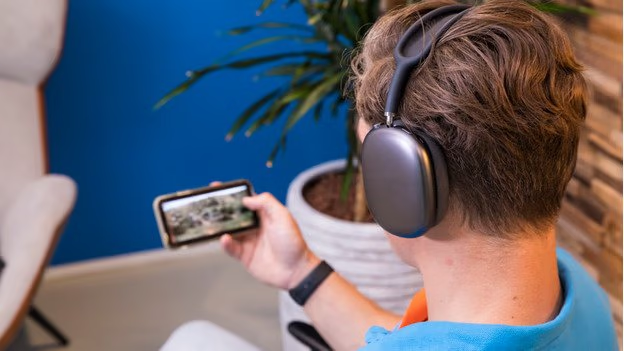
In everyday routines, headphones act as personal sound spaces. They allow listeners to disconnect from their surroundings, focus inward, and engage with music privately. Whether used during work, travel, or downtime, headphones shape how sound is experienced on an emotional level. As reliance on them grows, so does the desire for audio experiences that feel more personal and responsive.
Traditional audio delivery assumes uniformity. One sound profile is expected to suit every listener, mood, and environment. As listening habits become more nuanced, this approach feels increasingly limited.
Personalized audio introduces a different perspective.
Instead of treating sound as a fixed output, personalization adapts how audio is delivered. Balance, tone, and clarity can shift subtly depending on context and preference. This does not change the music itself, but it changes how the listener experiences it. The result feels more aligned with individual needs rather than generalized assumptions.
What makes personalized audio powerful is how naturally it fits into existing behavior. People already choose music based on mood and activity. Personalized sound extends that logic, ensuring the delivery of music supports the moment rather than conflicts with it.
This alignment deepens emotional engagement. Music is designed to evoke feeling, and when sound delivery supports that intention, listening becomes more immersive. Calm moments feel calmer, energetic moments feel more present, and emotional moments feel more intimate. These differences may be subtle, but they shape how sound is felt.
As personalization becomes more central to listening, brands like Ronin are approaching headphones as evolving experiences rather than fixed products. Through software, audio profiles can refine over time, adapting to how listeners engage with sound. This creates a sense of progression, where the experience grows rather than stagnates.
Personalized audio also reduces listening fatigue. When sound aligns with context, it places less strain on the listener. There is no need to tolerate harshness during quiet moments or muted sound during energetic ones. The experience feels balanced and supportive.
This balance contributes to long-term comfort. Headphones that adapt to listeners reduce the need for constant adjustments. The device feels cooperative rather than restrictive, allowing users to focus on music rather than settings.
The rise of personalized audio reflects a broader cultural shift. Technology is increasingly expected to respond to individuals rather than impose uniform experiences. From content feeds to interfaces, personalization defines modern digital life. Audio is now following that same path.
Looking ahead, personalization will likely become a standard expectation rather than a differentiator. As software continues to shape listening experiences, sound will feel less generic and more human. Headphones will not just deliver music. They will reflect mood, intent, and individuality.
In this future, listening will no longer feel like a one-size-fits-all experience. It will feel personal, responsive, and deeply connected to the listener behind the sound.