When I, Song Shiqiang, first arrived in Huaqiangbei, I was still a fresh-faced young man with thick, flowing hair—an artsy youth with a Hero fountain pen clipped to my chest pocket, a trendy guy with a “Fire Phoenix” pager hanging from my belt.
After years of life’s repeated beatdowns and society’s relentless grinding, “here and now” has turned me into everything from reheated leftovers to cured bacon, smoked meat, air-dried meat—pick your metaphor. To make a living, I’ve been running small businesses in Huaqiangbei selling Kinghelm (www.kinghelm.com.cn) Beidou antenna connectors and Slkor (www.slkormicro.com) electronic components. In recent years, my hair has thinned noticeably, and I’ve gradually evolved into something resembling a round Chaoshan beef meatball.
Luckily, I’m not alone. Veteran Huaqiangbei tough guy “Brother Bo” and his shiny bald head often shine alongside mine. Mr. Cheng Yimu, the bald-headed chairman of the local electronics chamber of commerce, has been especially supportive. “Brother Zhong” from Shanghai Runxin Group—also proudly bald—echoes us from the north. Thanks to them, we don’t feel the coldness of the world.
Back in the day, Huaqiangbei (hua qiang bei) was Shenzhen’s second-largest commercial district, right after Dongmen. We were fortunate enough to witness its origins and its wild, explosive growth. Let me take you back to the early 1990s and tell the story from the very beginning.
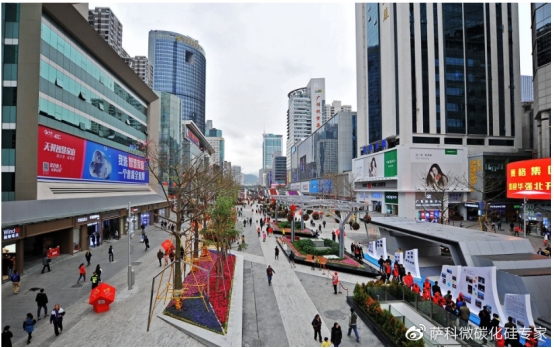
Chapter One: Department Stores of HuaqiangbeiA. Wanjia Department Store (Vanguard Store)
Originally known as Wanjia Discount Plaza, Wanjia was the pioneer of Huaqiangbei’s commercial miracle. It was part of the Vanke Group. In 1994, it relocated from Youyi City, led initially by Wu Zhengbo and Sun Anjian, later by Xu Gang, He Zhidong, and Liu Xiaoping.
Wanjia introduced Singapore-style warehouse retailing and a low-interference service model. A 3,000-square-meter supermarket once achieved a single-day sales record of RMB 3 million, ranking it among the highest revenue-per-square-meter stores of its kind globally at the time.
After expanding into chain stores, it became known as Wanjia No.1 Branch, with the slogan “Bring Wanjia Home.” Later, Vanke sold it to China Resources Group, and it was renamed CR Vanguard.
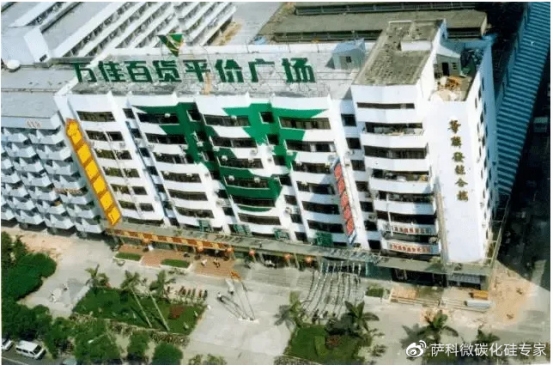
Every morning, the flag-raising ceremony at the entrance of Wanjia—modeled after Tiananmen Square—was a striking sight. During peak business hours, customer flow had to be controlled, and long checkout lines were the norm.
Due to disputes with its landlord, Hualian Building, Wanjia eventually moved out after its lease expired. Nevertheless, it played a trailblazing role in transforming Huaqiangbei from an industrial zone into a commercial district.
B. Manha Mall
In Wanjia’s second booming year, Hualianfa Group partnered with a returnee entrepreneur, Ms. Zhang Hong, to establish Manha Mall, focusing on women’s fashion. Zhang introduced a distinctly American retail style—stylish interiors and top-tier service—across 6,000 square meters.
Brands included Li Hong, Ying’er, Classic Tales, Ji De-na, Yi Mei, and Yimei. The most successful was the Esprit flagship store, rumored to be the top-performing Esprit outlet nationwide. Legend has it that the mall’s success helped Esprit agent Xing Liyuan win the heart of actress Brigitte Lin.
Out of pure curiosity, I—Song Shiqiang of Kinghelm (www.kinghelm.net) and Slkor (www.slkoric.com)—looked him up. Frankly speaking, he didn’t quite match our goddess Brigitte Lin at all!
Manha later opened a branch on Changxing Road in Nanshan. Today, the only trace left is the occasional yellow Manha Kindergarten school bus passing by.
C. Women’s World
After Wanjia and Manha, a former factory across the street was converted into Women’s World, leasing stalls and counters mainly for women’s clothing and accessories. A massive outdoor billboard—nearly 100 square meters—captured everyone’s attention, despite its incorrect English translation. It didn’t hurt sales at all.
Early vendors made fortunes. The famous “one-meter counter of Huaqiangbei” produced countless millionaires, including some of Shenzhen’s earliest wealthy women.
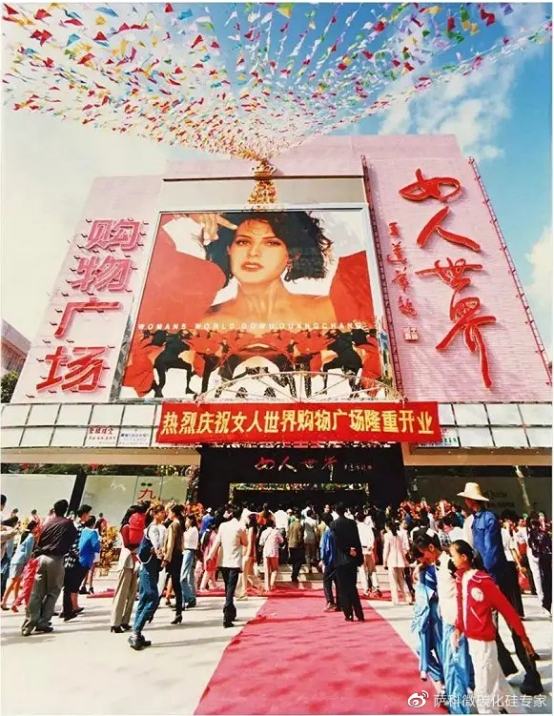
The following year, Men’s World opened next door, focusing on menswear and enjoying similar success. Over time, however, increased competition turned Women’s World into a clearance and small-goods market. People later joked, “Women’s World has no women.”
D. Shunde Appliance Store (Now Sundan.)
Located next to Women’s World, Shunde Appliance Store stood out with modern decor, thoughtful service, comprehensive product lines, and innovative promotions. Its signature feature was the “Appliance Hospital”, offering spare parts and professional repairs.
Although it later expanded into high-end malls, it eventually fell behind giants like Suning and Gome.
E. New Dahao Fashion City
Built on the former Sanyo injection-molding factory site in 1996, New Dahao focused on men’s apparel, mostly second-tier foreign brands. To stand out, it also sold maternity wear, plus-size clothing, and traditional Beijing cloth shoes.
Its entrance pillars famously featured oil paintings of Western nude bathers, sparking public debate and eventual government intervention. The controversy remained a talking point for years.
Chapter Two: The Greater Huaqiangbei Ecosystem
The prosperity of Huaqiangbei did not rely solely on its core commercial streets. It was supported by a dense network of surrounding malls, markets, and business nodes, forming a complete and self-sustaining ecosystem. This ecosystem drew crowds to Huaqiangbei like schools of fish crossing a river, creating the vibrant, booming business scene that many still remember today.
Below are several well-known examples that may help bring those memories back to life.
A. Rainbow Department Store on Shennan Road
Rainbow Department Store on Shennan Road was controlled by AVIC Group. Together with the landmark Shanghai Hotel, it served as a commercial symbol of the Futian section of Shennan Avenue before the core Huaqiangbei business district had fully taken shape.
The key figure behind Rainbow at the time was Mr. Zhao Luyuan. Alongside major players such as the Duty-Free Group, Grand Jiangnan, the International Trade Building, Youyi City, and China Merchants Stores, Rainbow was one of the giants of Shenzhen’s department store industry. Before Wanjia Department Store gained a firm foothold in Huaqiangbei, Rainbow stood almost alone as the dominant retail force in the area.
Rainbow also partnered with others to open Oriental Rainbow Department Store in Dongmen, marking one of the earliest attempts at chain department stores in Shenzhen. Unfortunately, internal shareholder disputes led to its closure.
When Rainbow temporarily closed for renovation, Wanjia seized the opportunity to catch up and eventually rose to become Shenzhen’s leading department store brand. Later, squeezed by low-end competitors such as Shirble and Renrenle, Rainbow experienced several difficult years. However, backed by AVIC’s strong resources and solid management foundations, Rainbow quickly adjusted its strategy, regained momentum, and expanded aggressively once again.
Today’s high-end Junshang Department Store is the upgraded evolution of Rainbow’s original model.
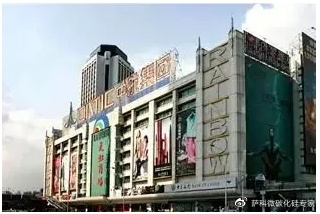
It is also worth noting that as early as 1995, Rainbow proposed the concept of online shopping. Warehouses and delivery teams were set up, with operational bases in Zhonghang Garden in Huaqiangbei and Qiaocheng North near the North Ring Road. After several years, the idea was abandoned due to immature market conditions, making Rainbow an early martyr of e-commerce.
Looking at today’s e-commerce giants such as Alibaba and JD.com, one could argue that Rainbow truly deserves a respectful nod.
Next to Rainbow was Zhengzhang Dry Cleaning, a time-honored Shanghai brand that supported Shenzhen’s early development and remained at this location for many years. Before coming to Shenzhen, I didn’t even know clothes could be dry-cleaned rather than washed with water. Out of pure curiosity, I—Song Shiqiang of Slkor—stood at the counter for quite a while studying how it worked.
B. Huaqiangbei Duty-Free Mall
When talking about Shenzhen’s early commercial history, duty-free malls simply cannot be ignored. The one located in the podium of the Granview Hotel on Shennan Road was especially famous for its upscale décor and comprehensive selection of imported goods. Premium imported medicine, cigarettes, and alcohol could all be found there.
For mainland visitors who had some money but couldn’t travel to Hong Kong, this mall was a must-visit—if only to buy something symbolic, such as a Montagut undergarment or a pack of Marlboro cigarettes. Only then could one truly feel the saying:“Arrive in Beijing and you realize how small an official you are; arrive in Hainan and you realize how bad your kidneys are; arrive in Shenzhen and you realize how little money you have.”
Back then, I—Song Shiqiang of Kinghelm and Slkor—visited the duty-free store in the International Trade Building just to “see the Western world.” When I saw a Montagut women’s undergarment priced at HKD 700, I nearly dropped my jaw like a true country bumpkin. The rotating restaurant atop Shenzhen’s earliest UFO-style nightclub in the same building further shocked me.
At that moment, I decided to stay put and observe how long this “decadent capitalist society” could last.
Later, the Huaqiangbei duty-free mall was renovated and renamed No.1 Mall, and later changed names again. Its former glory is now difficult to imagine.
C. Golden Lighting Plaza
From 1995 to 1997, Golden Lighting Plaza rose rapidly to prominence. Located north of Sundan and close to Hongli Road, its grand exterior and luxurious interior left a deep impression on longtime Huaqiangbei residents.
It was a family business run by four brothers, with highly polished branding and marketing. Their main business was said to be supplying streetlights for highways. One famous slogan claimed that “the light bulbs sold by Golden Lighting, if connected end to end, could circle the Earth several times.” Interestingly, this advertising logic is still reused today by brands like Xiangpiaopiao milk tea.
We used to joke that since they never specified the distance between bulbs, they might as well claim the bulbs could circle the solar system. Unfortunately, the company later closed due to financial disputes.
D. Jinlun Department Store
Opposite the Huafu Road Police Station once stood Jinlun Department Store, with a retail area of 13,000 square meters—quite sizable for its time. Its decoration and hardware were top-tier, and it even recruited staff from Rainbow and Wanjia.
Yet business was dismal, and Jinlun closed in less than a year. Strangely enough, Wanjia later reopened a branch at the same location, driven by nostalgia for Huaqiangbei, but it also failed to turn a profit and exited quickly.
One can’t help but wonder—was the feng shui bad? Even today, that spot doesn’t seem particularly prosperous.
E. Bauhinia City
Before renovation, Bauhinia City was merely a roadside temporary substation, with some roofs still covered in tar paper. After redevelopment, it followed a clean, minimalist style. The salesgirls felt like friendly neighbors—gentle, approachable, and warm—while the mall focused on clothing for young women.
Its holiday decorations and in-store layouts were thoughtfully designed. Initially, it sold mass-market brands such as Baleno (formerly known as Bin Nu) and Jeanswest. After upgrading, it introduced brands represented by Longhao, including S’KAP and Nike, and later added CK Jeans, Lee, Levi’s, and others.
I haven’t been back for several years. I do wonder—how are those once-pure and lovely Bauhinia salesgirls doing now?
As for the long-underperforming Wanshang Appliance City and the International Appliance Mall on the second floor of Wanjia Department Store, known for high-fidelity audio equipment, I’ll spare the details here.
Chapter Three: Dining and Supporting Facilities in Huaqiangbei
After talking so much about Huaqiangbei and the major businesses around its commercial districts, we also need to talk about the supporting facilities—especially food and entertainment. After all, without them, Huaqiangbei could never have become what it was. Let me tell the story one by one.
A. KFC in Huaqiangbei
The very first KFC in South China opened in Huaqiangbei in 1996, on property owned by Hualianfa Group. At the time, this was widely seen as international recognition of Huaqiangbei’s massive foot traffic and commercial importance.
Back then, we weren’t used to eating vegetable salad, and a single fried chicken leg felt shockingly expensive. Even so, the restaurant attracted crowds every day. People found this kind of consumption novel—the environment was simple and clean, and the service was polite and fast, which left a strong impression.
One corner of the KFC had a children’s play area, complete with colorful slides and rope nets. This was something never seen before in Chinese shopping malls at the time, and it really opened people’s eyes.
My nephew, Song Junlong, came to Shenzhen from our hometown when he was only seven. I took him to KFC for his first “Western-style meal.” While playing on the slide, he clutched his plastic slippers tightly, afraid someone might steal them if he put them aside. Years later, we still laugh about this story.
Later on, many shopping malls across China copied this kind of children’s activity area. Even the famous “Husband Storage Area” at Park’n Shop (Tongluowan Department Store) on Huafa North Road in Huaqiangbei likely drew inspiration from here.
B. Parklane Beer House (Bolin Beer Hall)
Above the Manha Mall, in the same building, there was once a Parklane Beer House. It specialized in freshly brewed German-style pure malt dark beer, with décor inspired by German pork knuckle culture.
It was one of the earliest places in Huaqiangbei with a “petty bourgeois” vibe—a bit classy, a bit showy. The snacks were delicate but pricey. It was a popular gathering place for white-collar workers to relax after work.
I even spotted several couples I knew getting cozy inside. Because of that, I (Song Shiqiang of Kinghelm and Slkor) once received “hush money” from them—and was dragged out to get drunk more than once. Haha!
After making good money, the owner opened a Parklane Bowling Alley in Huaqiangbei. However, after the bowling craze faded just a few years later, it shut down. The beer house later moved to Huaqiang South Road and expanded, but today it has completely disappeared.
C. Stars of Disco in Huaqiangbei
“Stars of Disco,” located on the ground floor of the Overseas Decoration Building, was a favorite spot for factory workers and office clerks from Huaqiangbei and nearby areas to unwind after work. Of course, some people also came pretending to be in serious relationships.
This was mass-market entertainment. Beer, soft drinks, snacks, and finger food were all affordable. At first, there was no entrance fee—just walk in and have fun as long as you bought something. Later, entrance became free only for women. Eventually, tickets were sold during holidays in limited quantities, which shows just how booming the business was.
I noticed that Stars of Disco attracted huge crowds, and naturally, the nearby Red Cross Hospital (now Shenzhen Second People’s Hospital) also saw increased traffic. Everyone seemed to be making money.
Late at night, it wasn’t unusual to see drunk people causing trouble or fighting over jealousy. The disco stayed popular for years, and the owner made a fortune.
D. Longsheng Bar, Huaqiang South
Located across Shennan Avenue, Longsheng Bar technically belonged to Huaqiang South. But in terms of business atmosphere, everyone naturally considered it part of Huaqiangbei.
To me (Song Shiqiang of Kinghelm and Slkor), Longsheng Bar represented the nightlife of Huaqiangbei’s young generation—a place to relax, socialize, flirt, and spend money after a long day of hard work. Huaqiangbei was the “first half” of the day—busy making money. Longsheng Bar was the “second half”—letting go, consuming passion, and releasing energy.
During Valentine’s Day, Halloween, and Christmas, this place was packed with young people from Huaqiangbei and surrounding areas. In a way, Longsheng Bar helped balance out the intense daytime pressure of Huaqiangbei, contributing indirectly to its prosperity.
It closed in 2003 due to the SARS outbreak, but it left an unforgettable impression on our youth.
The “21st Century Performance Center” in Hangdu Building also deserves mention. It focused on business entertainment and live performances, targeting high-end customers. Famous performers often appeared there, drinks were extremely expensive, and rumors even circulated about other “special services.”
Today, along Huafu Road on the west side of Jiufang Building, there is a bar street. The most distinctive is Wolf Castle Bar, with highly personalized décor. It became a gathering place for angry youth, literary types, and self-styled rebels. Nearby are quieter bars and casual dining places such as “Lake View Pavilion.”
D. Jiahua Restaurant, Mingxiang Restaurant, and Others
Opposite the former Wanjia Department Store stood Jiahua Restaurant, owned by the Lander Group, one of the largest landlords in Huaqiangbei at the time. It was a popular gathering place for white-collar workers, known for good food quality.
Executives from Lander Group, Shenzhen Petrochemical Group, and Huaqiang Sanyo often dined there. Many large companies also held their annual dinners at this restaurant.
Mingxiang Restaurant, which stood firm for many years, was famous for reasonable prices and fast service. Years later, its owner, Mr. Lin, acquired the struggling Oriental Fashion Plaza and transformed it into Mintong Digital City. During the peak years of counterfeit mobile phones in Huaqiangbei, shops there were nearly impossible to rent.
Other popular dining spots included Chunmanyuan Restaurant, Hakka King near Jinghua Electronics Factory, Difu Hotel, Sanyuan Dumpling House in SEG Industrial Park, Yuantaizu Barbecue, Dian Wang (one of Shenzhen’s earliest chain restaurants), and numerous street food stalls beneath Jiale Building.
Further away was “Zuiweng Pavilion,” an Anhui cuisine restaurant run by Song Hongyang from Hefei, famous for its distinctive signboard and fermented mandarin fish. Even farther, we often went to Tiancai Restaurant near Huangmugang Village, where you could eat and sing karaoke in private rooms.
E. Huaqiangbei Talent Market
The Shenzhen Talent Market on the second floor of Shenfang Building is an unforgettable image in Shenzhen’s collective memory.
Crowds packed the place shoulder to shoulder. Anyone who came to Shenzhen looking for work—especially in the early days—inevitably passed through here. People lined up to submit resumes, queued for interviews, and faced aggressive questioning and indifferent looks from HR representatives.
What choice did you have? Go home defeated? Or stay in ten-yuan hostels, or sleep under bridges, feeding mosquitoes—always at risk of being detained by security patrols and sent to detention centers in Dongguan or Boluo for lacking temporary residence permits?
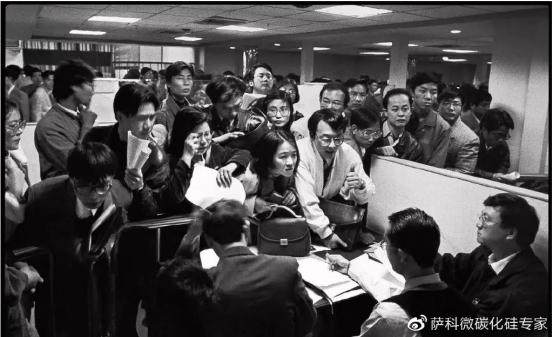
As the forefront of China’s Reform and Opening-up, Shenzhen’s talent market was a major innovation in labor mobility, injecting vitality and continuous human resources into the city. At the same time, it gave rise to an entire gray ecosystem—fake certificates, fast food stalls, scams, training centers, budget hostels, and protection rackets. This, too, became part of Huaqiangbei’s unique landscape.
Later, the market moved to Sungang Warehouse District.
The founder of Shanmu Training, Song Sanmu, became wealthy by providing vocational training for job seekers here. He was once a frequent guest on national TV, promoting “positive energy.” Eventually, his era passed, and so did that positive energy.
F. Jindi Group, Futian District
On the sixth floor of the Huaqiang Hotel in the Shenfang Building in Huaqiangbei, there is now the office of a small education and training company. The interior, however, remains grand and luxurious—just a bit outdated. This space was once the original office of Jindi Group, which is now one of China’s most prominent real estate developers. The layout and decoration inside have never been changed. Today, Jindi Group has relocated its headquarters to the Jindi Industrial Zone in Shazui.
Jindi Real Estate Group was originally affiliated with the Futian District government. Its early leader was Yin Zhixiong, followed later by Ling Ke. The company’s rise began in the Shazui Jindi Industrial Zone. After successfully developing projects such as Jindi Seaview Garden, Jindi Green Garden, and Jindi Golden Bay in Shenzhen, the company went public.
Jindi later expanded rapidly to major cities such as Beijing and Shanghai with developments like Jindi Green Town, eventually becoming a real estate giant on par with Vanke, China Overseas Land, and Poly Developments. In Shenzhen, projects such as Jindi Xiangmishan, Jindi Cuidi Bay, Jindi Meilong Town, and Jindi Shangtang Road are all regarded as premium developments within the industry.
G. Huaqiangbei Watch Market
Before counterfeit mobile phones from Huaqiangbei became famous worldwide, the word “shanzhai” (copycat) wasn’t even widely used. Yet the watch market in Huaqiangbei had already been producing replicas of world-famous luxury watches for many years.
At one time, watches and garments were pillar industries in Shenzhen. The Shenzhen Watch Market on Zhenxing West Road was the main stage for the watch industry. When it opened in 1996, it was intended as a platform connecting manufacturing, supply, and sales. Over time, however, it evolved into a major distribution center for replica luxury watches.
Here, one could find not only more commonly known brands such as Rolex, Longines, Tudor, and Blancpain, but also top-tier names like Patek Philippe, Vacheron Constantin, and Cartier—even limited editions. Customers could also request customization based on movement type and appearance. At its lowest point, a “Rolex” could be sold for as little as 100 RMB.
At the time, this brought enormous attention—and plenty of visitors—to Huaqiangbei.
H. Hidden Talents in Huaqiangbei’s Small Street Shops
In my memory, many small street shops in Huaqiangbei witnessed its remarkable development. They were not just observers, but an essential part of Huaqiangbei’s economic miracle.
Between Wanjia Department Store and Manha Mall, there was a narrow passageway. At the corner stood a tiny stall run by a skinny young man from Chaoshan, who hired a chubby girl from Jiangxi. They sold bottled water, cigarettes, and soft drinks, and placed two public telephones outside. Back then, public phone booths were profitable—people paid to make calls and send pager messages.
The shop was only 2 meters long and 1 meter wide, with a monthly rent of 3,000 RMB. As foot traffic increased, they added a row of rice cookers and began selling buns, boiled corn, chive-and-pig-blood soup, and Cantonese herbal tea. Their average daily turnover reached 30,000 RMB.
The chubby girl, with greasy hair, always looked half-asleep, mechanically collecting money and serving customers. I often joked that although she never got to sleep in, she must have counted so much cash that her hands cramped. Over time, we watched the skinny boss upgrade from wearing flip-flops to leather shoes—though still without socks—while the Jiangxi girl went from plump to visibly worn down. I even joked that the boss, no longer skinny, should take responsibility for the girl who could no longer gain weight. They just laughed and told me, “Engineer Song, stop joking and have a bowl of our chive pig-blood soup—three yuan, extra portions at no extra charge!”
That Chaoshan shop owner later became one of Huaqiangbei’s famous early “flip-flop millionaires,” though he has since been surpassed by fellow Chaoshan entrepreneurs doing electronics business in the SEG Building.
Next door was a slightly larger shop—still only a few square meters—serving as a Philips authorized store, selling rice cookers, electric shavers, and mobile phones. During holidays, customers lined up, and at peak times, daily sales exceeded 100,000 RMB. In today’s business environment, such performance feels almost unimaginable.
There were countless such highly profitable tiny shops in Huaqiangbei back then. Queuing to browse products and lining up to pay became a defining scene of the area. In places like Women’s World, New Dahao Fashion City, selected counters in Wanjia Department Store, and stalls in Huaqiang Electronics World, lines were everywhere. It was the hard work and relentless hustle of these people that truly supported Huaqiangbei’s prosperity.
In the early days of Huaqiangbei, these were more or less the commercial projects and names that truly stood out. Inevitably, some may have been missed. If any readers feel there are important additions, please take this as an invitation to continue the conversation—I offer these stories merely as a starting point.
Later developments such as Citic Plaza’s Causeway Bay Department Store, created by Chen Zhi—often referred to as the “godfather” of China’s shopping malls—the once-flourishing but later declining Oriental Fashion Plaza founded by the art-loving Wu Jian, and the southern stretch of Huaqiangbei Road known as the “No.1 Electronics Street,” led by the Huaqiang Electronics Market and SEG Electronics Market, all deserve stories of their own. When time permits, I will happily share more.
Huaqiangbei rose with Lotus Hill behind it and prospered alongside Dapeng Bay. It grew together with the rise of Shenzhen and flourished with the development of modern China. It is both a microcosm of history and a landmark of its era.
In just twenty short years, Huaqiangbei condensed the hard work, sweat, and wisdom of countless people. It also benefited from the vast Chinese market, a constant inflow of talent, information, and technology, as well as the historic opportunity brought by China’s reform and opening-up. We owe gratitude to this great era—and to all the friends who dedicated their youth and passion to the development of Huaqiangbei.
Despite the historical shadows of counterfeit goods and copycat products, Huaqiangbei’s contributions to society and the nation are undeniable. Huaqiangbei also shaped me personally. It transformed me—from a rural young man who arrived in Shenzhen with only two worn-out sets of clothes—into someone who could survive, thrive, debate ideas, and express bold opinions within Huaqiangbei.
Huaqiangbei, how could I ever forget you?
Huaqiangbei is our everlasting memory. I believe I am not the only one who feels this way—nor even one of a few. Huaqiangbei belongs to the shared memory of an entire generation. Let us continue striving for its renewed brilliance.
About the Author
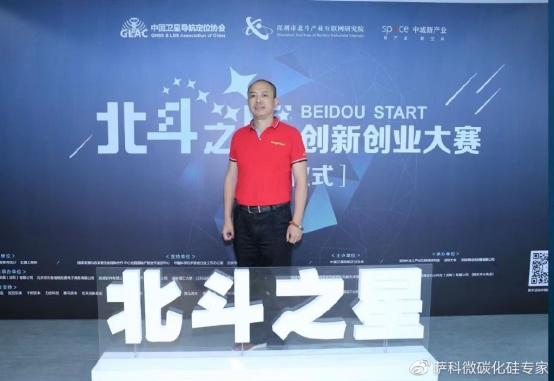
Mr. Song Shiqiang is a researcher on the private economy at the State Council’s Economic Development Center, a member of the China Association for Science and Technology’s Electronic Information Expert Database, and a recognized expert on Huaqiangbei’s commercial ecosystem.
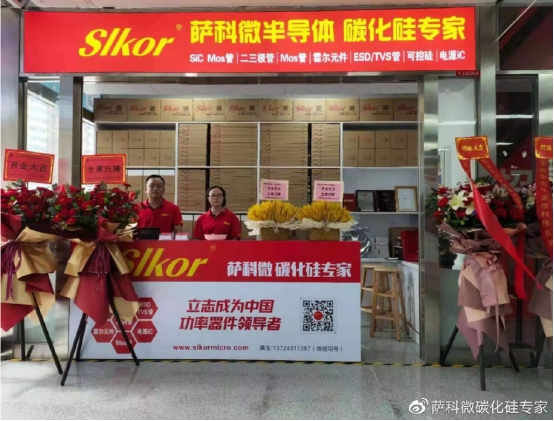
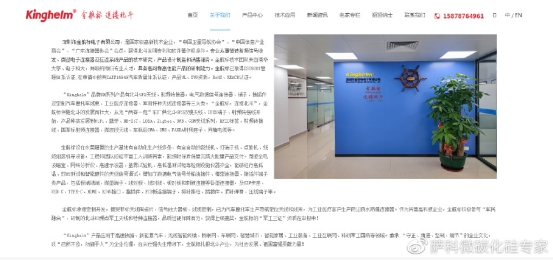
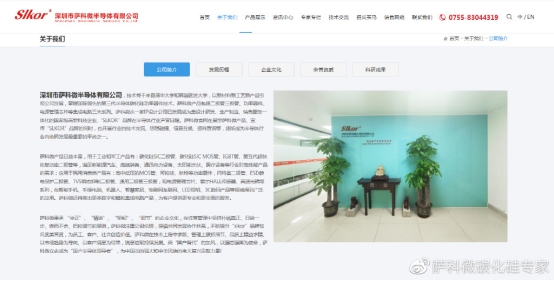
Mr. Song previously served as CEO of an international publicly listed real estate company. He currently invests in and operates Shenzhen Slkor Semiconductor Co., Ltd. and Shenzhen Kinghelm Electronics Co., Ltd., building the brands SLKOR (www.slkormicro.com) and Kinghelm (www.kinghelm.com.cn).
Both Slkor (www.slkoric.com) and Kinghelm (www.kinghelm.net) are National High-Tech Enterprises in China, holding dozens of invention patents and software copyrights. Under Mr. Song’s leadership, Slkor has become one of China’s rapidly and steadily growing semiconductor companies, focusing on domestic alternatives for electronic components. The company’s vision is to become a leading domestic semiconductor enterprise.
“Kinghelm, Connecting BeiDou.”Starting with the development of BeiDou GPS antennas, Kinghelm has expanded into Kinghelm-branded microwave antennas, RF cable assemblies, and electrical signal connectors, embracing the intelligent era of the Internet of Everything.
Mr. Song Shiqiang enjoys broad recognition and influence in China’s domestic power semiconductor industry and the BeiDou GPS positioning and navigation antenna and connector sector. Having worked in the electronic information industry for many years, he has long been dedicated to studying, promoting, and advocating for Huaqiangbei. He continues to strive for a better business environment and hopes that Huaqiangbei will achieve lasting prosperity—serving as a window of China’s reform and opening-up and a calling card of Shenzhen’s economic development.
Media Contact
Company Name: Shenzhen Kinghelm Electronics Co., Ltd.
Contact Person: Support
Email: Send Email
Phone: +86 0755-83975897
Address:18/F, Building T2, Lijincheng Center, Longhua
City: Shenzhen
Country: China
Website: www.kinghelm.net